Ottoman medicine was a sophisticated, holistic system that blended ancient Greek, Persian, Indian and Islamic medical traditions – principally humoral theory – with practical, empirical knowledge. Ottoman medicine integrated “prophetic medicine” and herbal pharmacology to restore balance within the human body.
Ottoman physicians (hakims) based treatments on balancing four humors – blood, phlegm, yellow bile, and black bile – derived from Greek and Islamic, particularly Ibn Sīnā, knowledge. Diagnosis relied heavily on pulse checks (nabz) and urine analysis (karure).
Treatment aimed to correct imbalances through diet, herbal remedies, and physical therapies. Pharmacology was highly developed, using herbal remedies from Anatolian flora, alongside complex pastes (macuns), sherbets, and mineral substances to treat conditions.
Prevention was deemed as important as cures. This included the widespread use of public baths (hamams) for hygiene, the use of fumigation with aromatic substances to prevent diseases, and early application of smallpox inoculation (telkih).

The Ottoman state supporting science and culture was a widespread tradition, the palace court, led by the Sultan, patronized scientists, physicians, artists, and various categories of scholars. The first Ottoman hospital was built 1399 by Sultan Yıldırım Bayezid in Bursa when that city was the capital of the expanding Ottoman state. Although the model for the hospital was taken from the Seljuks, the sultan brought in an Egyptian doctor to serve as the chief physician.
Medicine was generally taught in medreses along with the Qur’an and the shariyah and often the medreses had hospitals attached where practical lessons were taught. Sometimes there were separate medical schools (the first one was the Süleymaniye Medical School built as part of the Süleymaniye Mosque complex) that also had hospitals that included pharmacological studies and surgery.
Western hospitals of that era functioned primarily as religious almshouses, offering hospitality and palliative care for the poor rather than advanced medical treatment. Ottoman hospitals, or darüşşifa, were advanced institutions, designed for treating the sick, providing care to all members of society. Hospitals developed into various types, ranging from general hospitals to those specializing for example in the treatment of lepers (“leper asylums” were known as miskinhane or miskinler tekkesi) or the insane or even animals.
The teaching and the practice of medicine was inseparable from the institution of the hospital which contained, in addition to wards, major libraries, lecture halls and other facilities necessary for the training of medical students. Hospitals were designed as “healing houses” to provide a calm and serene environment, often featuring dome-covered wards, central courtyards, and fountains. Buildings such as the Süleymaniye Darüşşifa designed by Mimar Sinan or the Bayezid II Külliyesi in Edirne were characterized by healing-promoting design with courtyards and fountains. The relaxing sound of water was intentionally used to soothe agitated patients. They offered specialized departments for surgery, ophthalmology, and internal medicine.
Most hospitals were part of a külliye (a religious complex containing a mosque, school, and kitchen) and were funded by waqfs (Turkish: Vakıf, religious endowments) to provide care, medicine, and food. The treatment was free for all citizens, regardless of religion or status. While primarily for acute care (rather than chronic or terminal), they treated both physical and mental illnesses.
In contrast to contemporary European practices, the Ottomans treated the mentally ill in an exceptionally humane and holistic manner, viewing it as a physical ailment needing care rather than a supernatural curse.
Music therapy was a pioneering treatment, particularly at the Sultan Bayezid II Complex in Edirne (est. 1488), involved using music to heal the mind. Specific musical modes (makams) were tailored to treat different illnesses and emotions, played by skilled musicians three times a week. In hydrotherapy flowing water from fountains was used to treat psychological stress and anxiety.

Mentally ill patients were treated in special, airy wards. Treatments included medicinal teas, syrups, baths, and, when needed, spiritual healing such as the reading of the Quran. In addition to herbs and diets, aromatherapy, storytelling, and theatrical performances were also used for healing. The patient rooms were often arranged so that they overlooked gardens and made optimal use of the acoustics of the music and water.
Unlike in some European settings of the same era, patients with mental illnesses in the Ottoman Empire were often not isolated but were treated within the community, with visitors allowed and encouraged.
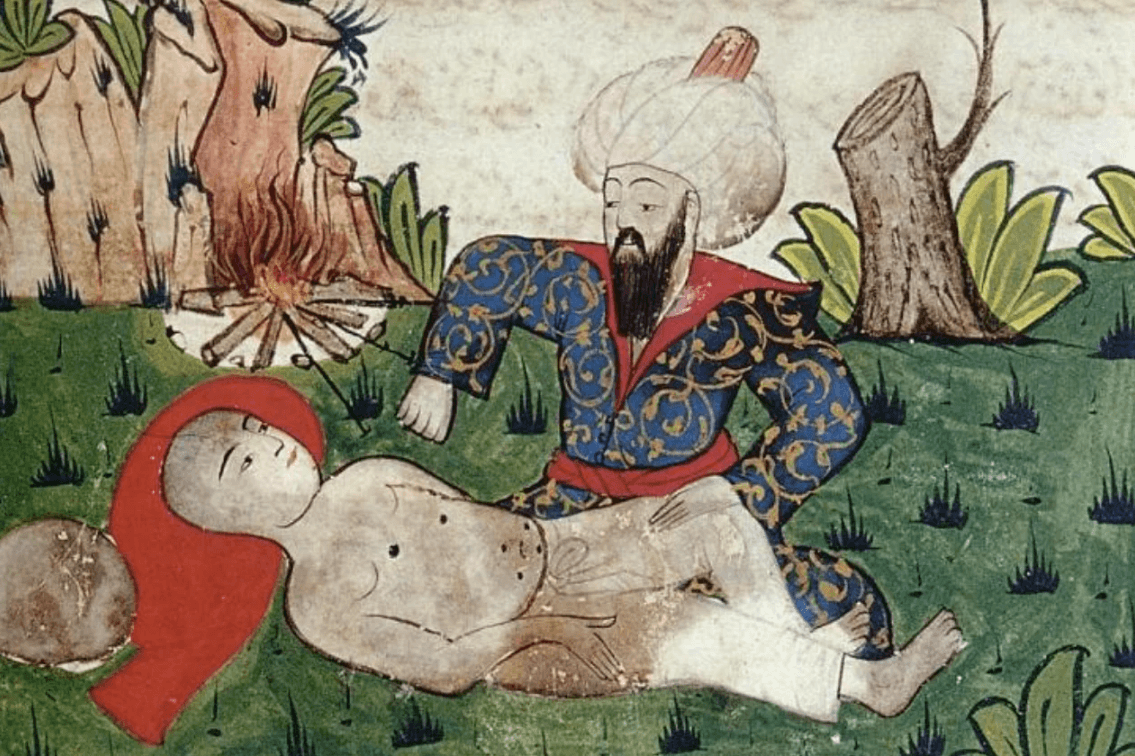
In 1465, Şerafettin Sabuncuoğlu, an Ottoman physician in Amasya, wrote the Cerrahiyetü’l-Haniyye, the first color-illustrated surgical atlas of the Islamic-Turkish world. Amasya, a small city in central Anatolia, at this time served as one of the cities to which the sultans sent their young sons to learn how to govern. As the site of a minor court, culture and art were emphasized. Sabuncuoğlu worked for 14 years in the Amasya Hospital. His book is well illustrated with colorful miniature paintings of different kinds of surgeries, two of them seen here in this blog. The book also shows a number of women performing surgeries long before women were allowed to practice medicine in the West.
More on Şerafettin Sabuncuoğlu you can read here: https://muslimheritage.com/serefeddin-sabuncuoglu-cerrahiyetu-l-haniyye/
Professional guilds for medical practitioners, particularly in the Arab provinces (such as Egypt) and in major cities like Istanbul, were organized to regulate medical practice, supervise apprenticeship, and maintain standards. These guilds functioned similarly to other craft guilds in the Ottoman system, serving the economic and regulatory interests of both the state and their members. Medical guilds were structured hierarchically and headed by a Sheikh (or Reis), who was chosen for their merit and experience. This leader acted as an intermediary between the practitioners and the Ottoman authorities. Guild members included surgeons (cerrah), barber-surgeons, ophthalmologists (oculists), bonesetters, apothecaries, and midwives.
Guilds ensured practitioners were qualified, often examining new members before allowing them to practice. They sought to prevent uncertified or incompetent practitioners from treating patients. They supervised the training of apprentices in a master-apprentice structure, common in both local shops and hospital-based training.
The guilds were typically religiously tolerant, including Jewish and Christian practitioners, especially in the 16th and 17th centuries. Guild leaders (Sheikhs) were consulted by the state as experts (ahl al-khibrah) to determine causes of death or evaluate physical injuries in legal cases.
While smaller practitioners were in guilds, the overall administration of medicine in the empire was managed by the Hekimbaşı (Chief Physician), who ran the palace health system and supervised the Süleymaniye Medical School (Süleymaniye Tıp Medresesi). The Imperial Palace cannot be compared with Western palaces and courts, for it was not only the residence of the Ottoman Sultans and their royal household, but also comprised schools and hospitals, and was a centre of trade, arts and crafts. With its about 10,000 inhabitants, the Ottoman Palace was the centre of the health organization of the Empire. More about this you can read here: https://muslimheritage.com/the-medical-organization-at-the-ottoman-court/
The guild system, which focused heavily on traditional, apprenticeship-based knowledge, began to change in the early 19th century. During the modernization era, particularly under Sultan Mahmud II, the state began to introduce modernized, standardized medical schools modeled on those in the West (such as the Imperial School of Medicine in 1827) to train doctors for the military, eventually shifting from guild-based licensing to state-issued diplomas, though the transition from traditional to modern medicine took long and involved complex challenges.
https://www.hurriyetdailynews.com/amp/medicine-under-the-ottomans-63050