Pirate John Ward: the real Captain Jack Sparrow
John Ward was one of the most flamboyant and ruthless pirates of the early 17th century, terrorizing the Mediterranean with little regard for morality. Though largely forgotten today, his life was an inspiration for Captain Jack Sparrow in the Pirates of the Caribbean films. His rise from obscure beginnings to immense wealth and notoriety is one of the most remarkable stories in pirate history.
John Ward or Jack Ward was born around 1553 into a poor family in Kent, England. His early life was unremarkable: he worked as a fisherman and gained a reputation as a gloomy, heavy-drinking man who envied the success of others.
His fortunes began to change after the defeat of the Spanish Armada in 1588. Like many English seamen, Ward turned to privateering—a semi-legal form of piracy sanctioned by Queen Elizabeth I. Privateers were licensed to attack Spanish ships, sharing their loot with the Crown and the Lord Admiral’s agents. Although little is known about Ward’s success during this period, it was here that he learned the skills that would later define his career.

In 1604, however, everything changed. The war between England and Spain ended, and King James I banned privateering. Suddenly unemployed, Ward longed for the lawless freedom of the seas. While living in Portsmouth, he heard of a merchant ship in the harbour carrying valuable goods. Gathering a group of around 30 men, Ward seized the vessel under cover of night. However, the ship’s owner had already removed his valuables.
Undeterred, Ward soon captured a French merchant ship near Cornwall through deception—pretending friendship before launching a surprise attack. This marked the true beginning of his pirate career. Realising he needed a larger crew and better opportunities, Ward recruited smugglers and sailors from Cornwall and set sail for the Mediterranean, where rich merchant vessels were plentiful.
After capturing two ships along the way, Ward attempted to establish himself in Algiers, which had been a haven for pirates for many decades. But just a few months earlier, the city had been attacked by an English privateer named Richard Gifford, and the city’s governor was understandably ill-disposed towards Englishmen.
He instead went to Salé in Morocco, a well-known pirate haven. There, he joined forces with other English and Dutch pirates before continuing to Tunis, which would become his main base of operations.
At the time, Tunis was under Ottoman control, with the power held by Uthman Dey, leader of the janissaries garrisoned in the city. Uthman Dey had created a powerful guild of corsairs. Although Ward and his ragged, toothless, heavily bearded crew appeared unimpressive, Uthman recognised his ability and allowed him to operate from the port in exchange for a share of the profits.
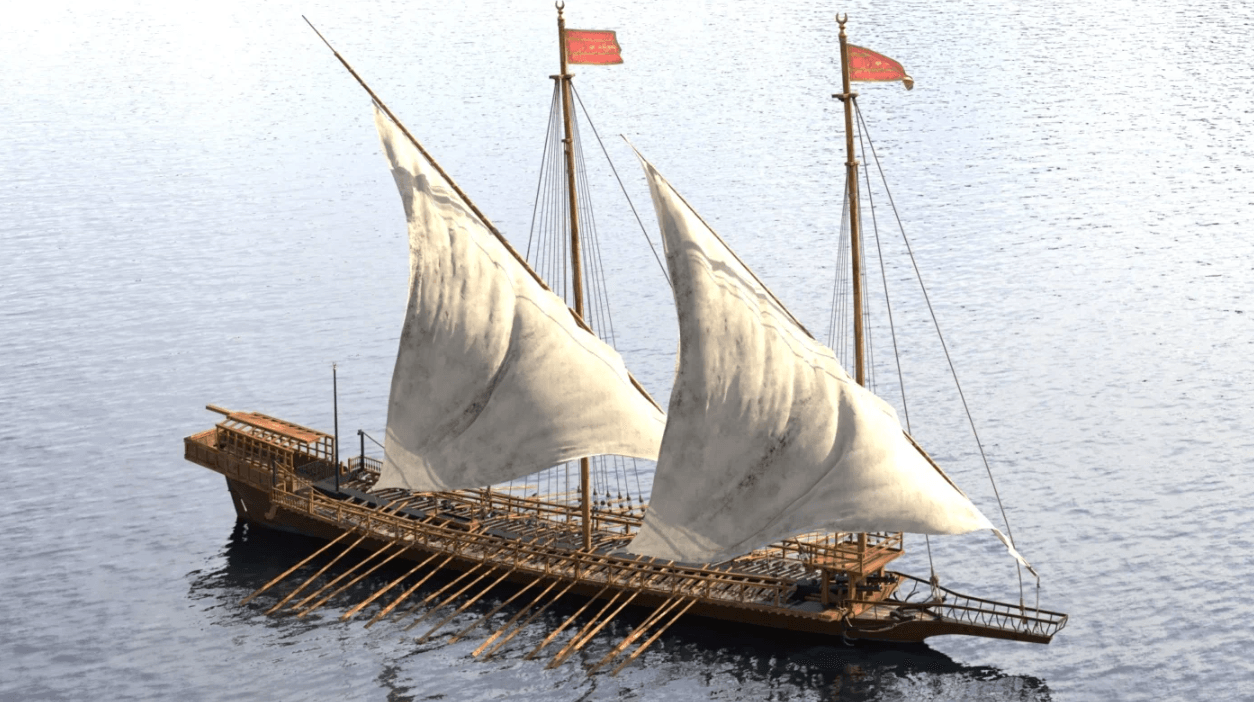
From this base, Ward’s success was extraordinary. He captured numerous ships, including richly laden merchant vessels such as the John Baptist, which he renamed the Little John, and others like a vessel he renamed the Gift, suggesting that Ward had a sense of humour. His raids brought in vast quantities of luxury goods—silks, spices, and precious cargo from across the Mediterranean trade routes. Crews who resisted were often enslaved.
As his wealth grew, so did his status. Ward ingratiated himself with Uthman Dey and was granted land in Tunis, where he built a lavish palace described as fit for a prince, unthinkable in his native England. He adopted an extravagant lifestyle, wearing fine clothes, eating sumptuous meals, and maintaining servants, including cooks and a food taster. Once a poor fisherman, Ward now lived like a ruler.
His most famous exploit came in April 1607. While sailing near the Turkish coast, Ward encountered the Reniera e Soderina, a massive Venetian merchant ship sailing from Aleppo carrying an enormous cargo of silks, indigo, and cotton. The ship was heavily laden and unable to manoeuvre effectively, making it vulnerable.
Ward attacked with cannon fire, damaging the ship and starting fires onboard. After hours of bombardment, he launched a boarding assault. Despite resistance from the crew, his men used deadly chain shot to destroy the rigging and kill defenders. Ward himself led the charge, fighting fiercely until the ship was captured. The crew was enslaved, and the prize was taken back to Tunis in triumph.
This victory marked the peak of Ward’s career. However, it was followed by disaster. After refitting the captured ship for piracy, structural modifications weakened it. On its first voyage under Ward’s command, it was caught in a storm and sank, killing around 350 men. Ward survived, but his reputation suffered greatly.
The tragedy turned many in Tunis against him, especially those who had lost relatives. Ward asked King James I of England for a royal pardon which was refused, due to a threat of war from Venice, as Ward had attacked many Venetian ships, and he reluctantly returned to Tunis. Increasingly dependent on Uthman Dey’s protection, Ward’s position became precarious. Around 1610, he made a dramatic decision: he and his crew converted to Islam—a process known as “turning Turk”—and he took the name Yusuf Reis. He settled permanently in Tunis and married again while continuing to send money to his wife in England.
In his later years, Ward declined significantly. Contemporary accounts describe him as physically diminished, and no longer the formidable figure he once was. He spoke little and was said to have become a shadow of his former self.
Despite this decline, Ward’s legend grew even during his lifetime. His exploits were widely circulated in plays, ballads, and pamphlets, which portrayed him both as a villain and a romantic anti-hero. One popular ballad, Captain Ward and the Rainbow, imagined him defying the King of England, declaring that while the king ruled the land, he would rule the sea.
Ward’s story also reflects the wider world of the Barbary corsairs—pirates and privateers operating from North African ports such as Algiers, Tunis, Tripoli, and Salé. Initially composed mainly of Muslim sailors under Ottoman authority, these corsairs were later joined by Dutch and English pirates like Ward, especially after privateering was outlawed in England.
The Barbary corsairs dominated Mediterranean piracy in the early 17th century. They were highly skilled navigators and conducted raids across vast distances, targeting merchant shipping and even coastal settlements. Many of their countless victims were captured and sold into slavery in North Africa, with few ever returning home.
John/Jack Ward stands out among them as one of the most unusual figures: an Englishman who rose from poverty to immense wealth, became a feared pirate commander, and ultimately reinvented himself in a foreign land. And Ward became the inspiration for the character of Captain Jack Sparrow in the Pirates of the Caribbean films. Ward’s nickname was ‘Sparrow’ and he was known for his flamboyant style – much like the Hollywood icon. One of the ships that Ward has captured was called Pearl, whereas Jack Sparrow’s favorite ship was the Black Pearl. And by the way – another main character in the Pirates of the Caribbean was Captain Barbossa, which bears a barely coincidental resemblance to the name of Hayreddin Barbarossa, a famous Ottoman corsair and later admiral of the Ottoman Navy.
Main source: https://www.historyextra.com/period/elizabethan/pirate-john-ward-the-real-captain-jack-sparrow/