While we fast for Ramadan it is difficult to see that so many people are breaking iftar with coca cola and other forms of unhealthy beverages. So I was inspired to write this article in the hope it will inspire others to be mindful.
The Sacred Sips of the Sultans: Ottoman Beverages and the Way of Halal & Tayyib
A Journey Through the Blessed Drinks of the Ottoman Palace
Introduction: The Spiritual Foundation of Ottoman Cuisine
The Ottoman Empire was not merely a political and military powerhouseit was a civilization built upon the firm foundation of Islamic principles. At the heart of this civilization lay the concept of halal (permissible) and tayyib (pure, wholesome, good). These were not abstract ideals but living practices that permeated every aspect of life, including what graced the tables of the mighty Sultans.
The Sultans of the Ottoman Empire were not just rulers; they were murids (spiritual seekers) of eminent Shaykhs who were deeply disciplined in the sacred sciences: Islam (the outward law), Shariah (the divine pathway), Tariqah (the spiritual path), Marifah (divine knowledge), and Azimah (spiritual determination). Under the guidance of these spiritual masters, the Sultans understood that what they consumed was not merely sustenanceit was a form of worship, a means of purifying the body that houses the soul.
This article explores the blessed beverages of the Ottoman Empiredrinks that nourished not only the body but the spirit, embodying the principles of halal and tayyib that guided one of history’s greatest Islamic civilizations.
The Philosophy of Ottoman Beverages
Halal: The Permissible Path
In the Ottoman culinary tradition, every ingredient was scrutinized through the lens of Shariah. The Sultans’ kitchens, known as the Matbahı Amire (Imperial Kitchen), operated under strict religious supervision. Beverages were crafted without alcohol, without impure ingredients, and with full consciousness of Allah’s commands.
Tayyib: The Wholesome Way
But the Ottomans went beyond mere permissibility. They sought what was tayyibpure, wholesome, and beneficial. This concept, rooted in the Qur’anic command to “eat of the tayyibat (good things) which We have provided for you” (AlBaqarah 2:172), guided the palace physicians and chefs in creating beverages that healed, strengthened, and elevated the human being.
The Blessed Beverages of the Ottoman Empire
- Salep (Sahlep): The Winter Elixir of Paradise
Perhaps no drink better embodies the Ottoman commitment to tayyib than Salepa warm, creamy beverage made from the powdered roots of wild orchids.
The Sacred Origins:
When the Turkish people embraced Islam in the 8th century, they sought alternatives to the alcoholic beverages of their past. Drawing upon their deep knowledge of nature, they discovered that the tubers of wild orchids, when washed, boiled, dried, and ground into flour, produced a drink of extraordinary warmth and healing power.
The Tayyib Benefits:
Ottoman physicians, trained in the Islamic medical tradition of Tibb alNabawi (Prophetic Medicine), recognized Salep as a medicine of remarkable potency:
Respiratory Healing: The glucomannan in Salep was known to heal bronchitis and soothe coughs
Cardiac Strengthening: It was believed to empower the heart and mind
Digestive Harmony: It stops diarrhea and warms the body from within
Immune Support: Ottoman physicians believed it strengthened the immune system
The drink was traditionally prepared by mixing Salep flour with milk and sugar, then garnished with cinnamona spice praised in Islamic tradition for its warming and medicinal properties. The famous 17thcentury Ottoman traveler Evliya Çelebi recorded that drinking Salep was a widespread habit in Ottoman cities, particularly in Istanbul’s marketplaces during winter.
A Note of Caution:
True Salep is rare today, as it takes 78 years for orchid tubers to grow sufficiently, and over 1,000 tubers are needed for just one kilogram of flour. The Ottoman respect for nature’s balance reminds us to consume this blessing with gratitude and moderation.
- Boza: The Ancient Fermented Treasure
Boza represents one of the oldest beverages in human history, with roots stretching back over 3,000 years to Mesopotamia. Yet it was in the Ottoman Empire that Boza reached its golden agea testament to the Islamic art of transforming simple ingredients into nourishing treasures.
The Ottoman Transformation:
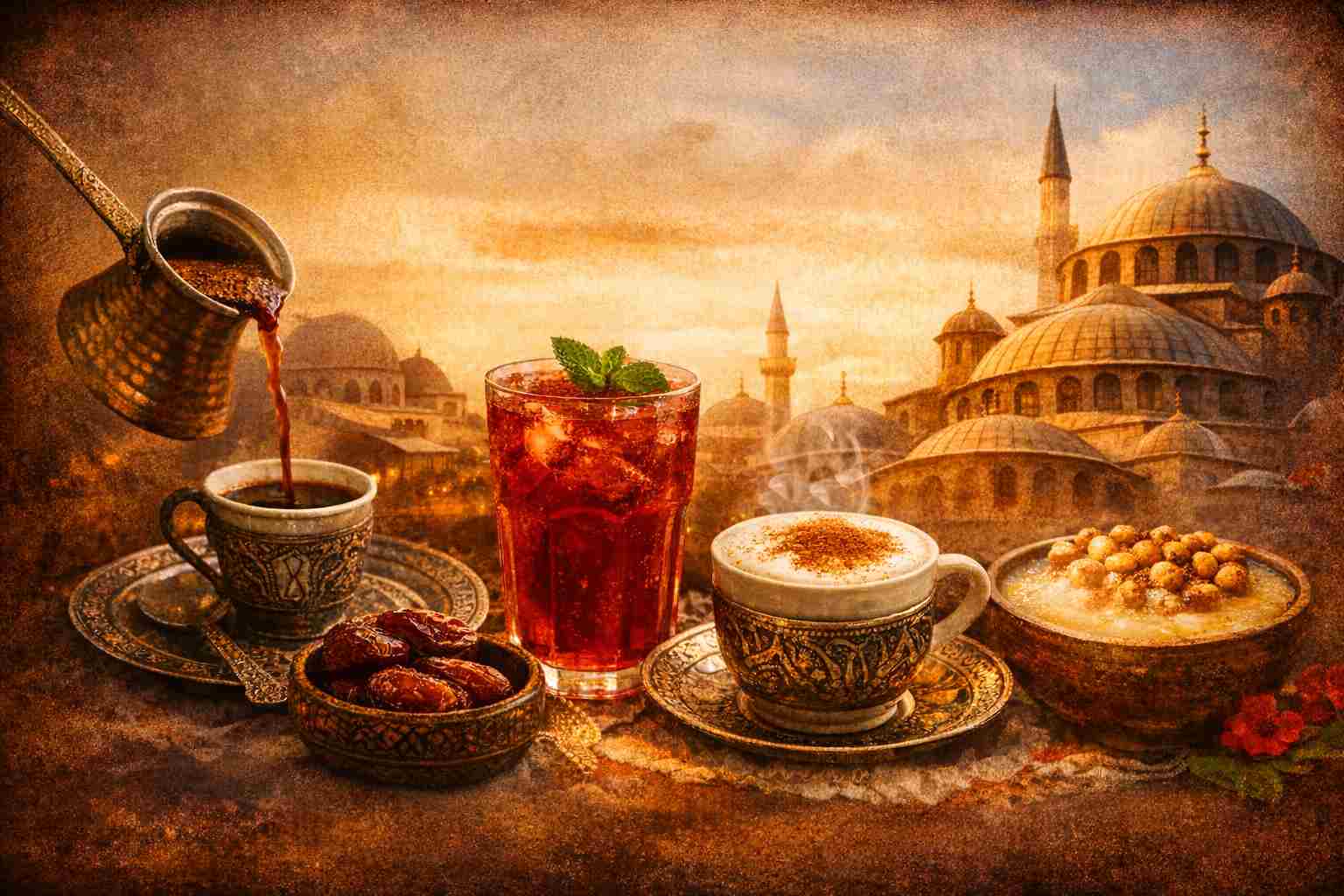
When the Ottomans encountered Boza, they purified it of its alcoholic elements, creating a thick, tangy, nonalcoholic version that aligned with Islamic principles. The preferred Ottoman Boza was thick and wholesome, traditionally consumed with cinnamon and roasted chickpeas (leblebi).
The Golden Age of Boza:
The heyday of Boza was undoubtedly during the Ottoman Empire. By the 17th century, Istanbul housed over 300 boza shops employing more than a thousand people. Evliya Çelebi’s famous Seyahatname (Book of Travels) captured this vibrant scene, describing the distinctive calls of boza vendors wandering the streets with their metal containers.
The Tayyib Benefits:
Probiotic Richness: The lactic acid fermentation process creates beneficial bacteria for gut health
Nutrient Density: Made from millet, bulgur, or barley, Boza provides sustained energy
Digestive Support: The fermentation process makes nutrients more bioavailable
Immune Boosting: Traditional wisdom held that Boza strengthened the body against winter ailments
The famous Vefa Bozacısı in Istanbul, established in 1876 and still operating today, preserves this sacred tradition. The shop even displays a cup from which Mustafa Kemal Atatürk drank in 1937a reminder of how this blessed beverage has nourished generations.
- Ottoman Sherbet: The Nectar of Hospitality
The word sherbet comes from the Arabic shariba (to drink), and in the Ottoman Empire, it became an art form of extraordinary refinement. More than a mere refreshment, sherbet was a symbol of hospitality, celebration, and divine blessing.
The Palace Tradition:
In the Ottoman palace, sherbet was prepared in special sections of the kitchen called helvahane (sweet house). A dedicated official, the şerbetçibaşı (chief sherbet maker), was responsible for preparing and serving these precious drinks to the Sultan and honored guests. Sherbets were served in gold or silver cups, reflecting their sacred status.
Varieties of Blessing:
Rose Sherbet: Made from fragrant rose petals, cooling and heartopening
Pomegranate Sherbet: Rich in antioxidants, symbolizing abundance
Tamarind Sherbet: Believed to aid digestion, commonly consumed during Ramadan
Hibiscus Sherbet: Refreshing and cooling for summer months
Violet Sherbet: Delicate and soothing
Loğusa Şerbeti: A special postpartum sherbet served to new mothersa tradition that continues today
The Tayyib Benefits:
Ottoman physicians carefully studied the medicinal properties of each sherbet variety. Tamarind sherbet was prescribed for digestive issues. Rose and hibiscus sherbets were recommended for cooling the body in summer. Each recipe was a marriage of flavor and function, pleasure and healing.
- Ayran: The Humble Nectar of the Nomads
Ayran represents the beautiful continuity between the Central Asian Turkish heritage and Ottoman refinement. This simple drink of yogurt, water, and salt has been consumed by Turkish tribes for centuries, and the Ottomans elevated it to an art form.
From Steppe to Palace:
The nomadic Turks diluted yogurt to make it portable and thirst-quenching during their journeys. When they established the Ottoman Empire, they brought this practical wisdom with them. In the palace, Ayran was consumed as a cooling beverage during hot summer months, with variations that included mint, rose water, or mild spices.
The Tayyib Benefits:
Probiotic Power: Rich in beneficial bacteria that support digestive health
Hydration: The combination of water and electrolytes makes it deeply hydrating
Cooling Properties: Traditionally served with kebabs and rich dishes to balance heat
Nutritional Density: Provides protein, calcium, and B vitamins
Evliya Çelebi noted that Ayran was one of the most common beverages in Anatolia, consumed across all social classes. This democratic nature available to Sultan and subjects alike reflects the Islamic principle that the best blessings are those shared widely.
- Turkish Coffee: The Drink of Contemplation
Introduced to the Ottoman Empire from Yemen in the mid16th century, coffee quickly became more than a beverage it became a cultural institution. The first coffeehouses opened in Istanbul in 1554, becoming spaces not merely for drinking but for conversation, literary gatherings, and spiritual discourse.
The Sacred Preparation:
Turkish coffee is prepared with intention and presence qualities essential to the spiritual path. The fine grinding, the slow brewing in a cezve, the careful pouring all become acts of mindfulness. The grounds left behind even became a tool for reflection, as the practice of coffee cup reading (fal) emerged.
The Tayyib Benefits:
Mental Clarity: Moderate consumption supports focus and alertness
Social Bonding: Coffeehouses fostered community and intellectual exchange
Spiritual Wakefulness: The Sufis recognized coffee’s ability to support night-time devotion
The Spiritual Dimensions: Murids of the Sacred Path
The Ottoman Sultans understood that the body is a trust (amanah) from Allah, and that nourishing it with halal and tayyib sustenance was a religious obligation. As murids of accomplished Shaykhs, they practiced muraqabah (spiritual vigilance) even in their eating and drinking.
The Five Stations Reflected in Ottoman Beverages:
- Islam (Submission): Every drink was prepared in submission to Allah’s commands no alcohol, no impure ingredients, no excess.
- Shariah (The Path): The detailed regulations of Islamic dietary law were meticulously observed, with palace kitchens supervised by religious scholars.
- Tariqah (The Way): The preparation and consumption of beverages became spiritual practices intentional, mindful, and grateful.
- Marifah (Divine Knowledge): Ottoman physicians possessed deep knowledge of the properties of plants, understanding that each ingredient carried divine wisdom.
- Azimah (Determination): Despite the temptations of power and wealth, the Sultans maintained their commitment to simple, wholesome nourishment.
Lessons for Today: Reviving the Ottoman Way
In our modern age of processed foods and artificial ingredients, the Ottoman beverage tradition offers profound lessons:
- Return to Natural Ingredients
The Ottomans used what Allah provided orchids, grains, fruits, flowers, yogurt. No artificial colors, no synthetic preservatives, no hidden harm.
- Preparation with Intention
Every beverage was prepared with niyyah (intention) and ihsan (excellence). The hands that prepared the Sultan’s drink understood their sacred responsibility.
- Consumption with Gratitude
Before raising a cup, the Ottomans would remember the Source of all blessings. The Basmala was recited, and gratitude was expressed.
- Sharing as Worship
Beverages were offered to guests as an act of sadaqah (charity). The Prophet ﷺ said, “Whoever believes in Allah and the Last Day, let him honor his guest.” A cup of sherbet was an offering of love.
- Healing as a Trust
Ottoman physicians viewed their knowledge as a trust from Allah. They studied the tibb (medicine) not for wealth or fame, but to serve Allah’s creation.
Conclusion: A Cup of Remembrance
When we raise a cup of Salep on a winter evening, sip Boza on a cold night, or share sherbet with a guest, we participate in a tradition that stretches back centuries tradition rooted in the divine principles of halal and tayyib.
The Ottoman Sultans, as murids of the sacred path, showed us that even the simplest acts drinking a cup of warm milk with orchid root can become acts of worship when performed with consciousness of Allah.
In a world increasingly disconnected from the sources of our sustenance, the Ottoman beverage tradition calls us back to wholesomeness, purity, and gratitude. It reminds us that the body is a temple, that food is medicine, and that every sip can be a remembrance of the Divine.
May we revive these blessed traditions, not merely as historical curiosities, but as living practices that nourish our bodies, elevate our spirits, and draw us closer to the Source of all blessings.
“And He gave you from all that you asked of Him. And if you should count the favor of Allah, you could not enumerate them. Indeed, mankind is [generally] most unjust and ungrateful.” Qur’an 14:34
About the Author: This article is dedicated to the memory of the Ottoman scholars, physicians, and spiritual masters who preserved the sacred knowledge of wholesome nourishment for future generations.