The Persian population converted to Islam during the time of the Prophet sallallahu alayhi wa sallam and his rightly-guided caliphs. During the Seljuk and Khwarazmian eras, Ahl as-sunnah Wal Jama’ah made up the bulk of the population across the Iranian plateau. There were only smaller localized exceptions, cities like Qom, Rey, Kashan, and certain regions in Mazandaran and Gilan had established Shia communities.
The Safawiyya tariqa (Sufi order) was founded by the Sunni mystic Zahed Gilani and re-named after his son-in-law and successor Safi al-Din Ardabili (1252–1334), born in Ardabil in Azerbaijan, where his shrine was erected after his death. He was regarded as a godlike miracle-worker by some semi-nomadic Türkmen (later called Qizilbash) who flocked to the shrine and attached themselves to the order.

Safi’s tariqa grew in influence, and wealth – and was supported by the Qara-Qoyunlu dynasty, also known as the Black Sheep Turkomans. The leadership was passed down in the Safavid family. On the death of the fourth Safavid shaikh Ibrahim in 1447, a dispute arose about succession, and Ibrahim’s son Junaid was expelled, and travelled in eastern Anatolia and Syria, where he built up his militant and extremist following among the Türkmen (who were beginning to find Ottoman rule and taxes irksome), with a recognisably Shi’i flavour – though orthodox Shi’i would have been horrified by his pretensions to divinity (Ali himself was also elevated to divine status by Junaid). His followers openly called Shaikh Junaid God, and his son [Haidar], son of God. They praised him thus: “He is the Living One, there is no God but he”.
Haydar maintained the policies and political ambitions initiated by his father. The order became crystallized as a political movement with an increasingly extremist heterodox Twelver Shi’i coloring. Haydar was responsible for instructing his followers to adopt the scarlet headgear of 12 gores commemorating The Twelve Imams, which led to them being designated by the Turkish term Qizilbash “Red Head”. Haydar married the daughter of Uzun Hasan, ruler of the Aq Qoyunlu, the second big Turkoman tribal confederation of that era. Haydar was killed after a battle, his sons Ali Sultan and Ismail were imprisoned by the Aq Qoyunlu who felt threatened by the order. When the older Ali Sultan was killed by them in 1494, the younger son Ismail escaped. He was only seven, but was now head of the Safiyya community.
In 1499, the 12-year old God-King set out with his Qizilbash army. He destroyed the Shah of Shirvan (avenging his father and grandfather) and eventually defeated the Aq Qoyunlu, conquered their capital Tabriz (then the largest city in Persia) in 1501 and proclaimed himself the Shah of Iran, officially founding the Safavid Dynasty. He immediately established Twelver Shi’ism as the compulsory state religion. He famously gave the population an ultimatum: convert or face death. In Tabriz alone, approximately 20,000 Sunnis were reportedly executed for refusing to convert. The campaign focused heavily on eliminating Sunni religious leaders and intellectuals to leave the population without spiritual guidance.
To erase the deep-rooted Sunni identity of the Iranian plateau, the Safavids targeted physical and cultural symbols of the faith. The tombs of prominent Sunni figures, such as Abu Hanifa and Abdul-Qadir Gilani, were destroyed. Major Sunni mosques were seized and repurposed for Shia rituals. The state institutionalized the public cursing of the first three “Rightly Guided” Caliphs (Abu Bakr, Umar, and Uthman), whom Sunnis revere but Shias view as usurpers.
Since Iran lacked a significant native Shia clerical class, the Shah had to “import” the religion’s infrastructure. Prominent Shia jurists and scholars were invited from Arab lands—specifically Lebanon (Jabal Amil), Iraq, and Bahrain—to establish seminaries and teach the population the basics of Shia law and ritual. These imported scholars were given land and political power in exchange for their loyalty to the Safavid throne.
The Qizilbash (“Red-Heads”), the militant group of Turkmen tribesmen, served as the enforcement arm of the Shah. They acted as both a military elite and a religious police force, ensuring that the Shah’s decrees were followed in the provinces.
By creating a distinct religious identity, Ismail separated his empire from the Ottoman Empire to the west and the Uzbeks to the east, both of which were Sunni. The new faith acted as a “glue” to unify the various ethnic groups under a single, distinctly Iranian-Shia banner.
After defeating the Uzbek leader Muhammad Shaybani (who had requested to the end the oppression of the Sunnis) in 1510, Ismail had the leader’s skull made into a gold-plated drinking goblet. He was also known to order the bodies of his enemies to be cooked and eaten by his most fanatical soldiers to demonstrate their devotion.
António Tenreiro, a Portuguese traveler and eyewitness of the brutality of Shah Ismail, described seeing the remains of roughly 5,000 people who had been burned alive by Safavid forces, and noted that Ismail did not merely order deaths but often acted as the executioner himself. He described the Shah beheading or mutilating prisoners who were bound hand and foot, highlighting this as a demonstration of his absolute power and divine right. These acts were performed in front of his court and the Qizilbash warriors to maintain an aura of fear and religious fervor.
The Qizilbash regarded Ismail as the Murshid-e Kamil (Perfect Spiritual Guide) and even a physical manifestation of the divine. To them, his actions – no matter how brutal – were the expressions of God’s will. Executing his enemies was seen as purging “impurity” from the world. Ismail claimed to be the Mahdi or at least his precursor. The Qizilbash believed they were fighting a cosmic war at the end of times. In this context, killing “infidels” (Sunnis) was a holy duty to prepare the earth for a new era of justice. Tenreiro observed that this fanatical devotion made the Qizilbash “fear neither death nor the devil,” because they believed their Shah held the keys to both life and the afterlife.
Drinking was not just a vice but a key component of Safavid social and courtly life. Ismail even wrote poetry praising wine. Wine was part of the warrior-mystic identity.
As the Ottomans saw themselves as the leaders of the Islamic world, Sultan Selim I denounced Ismail’s actions as abominations, accusing him of the killing of the “upright community of Muhammad” (Sunnis) and labeling him a “deceiver” and an enemy of the Divine Law.
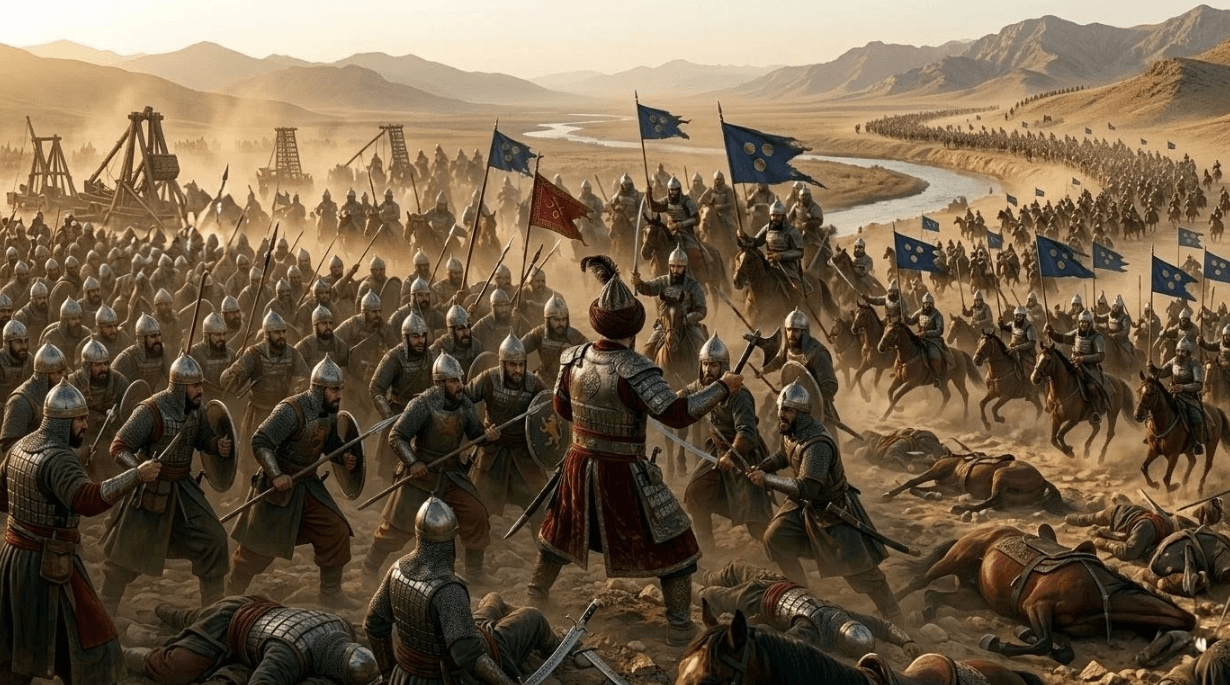
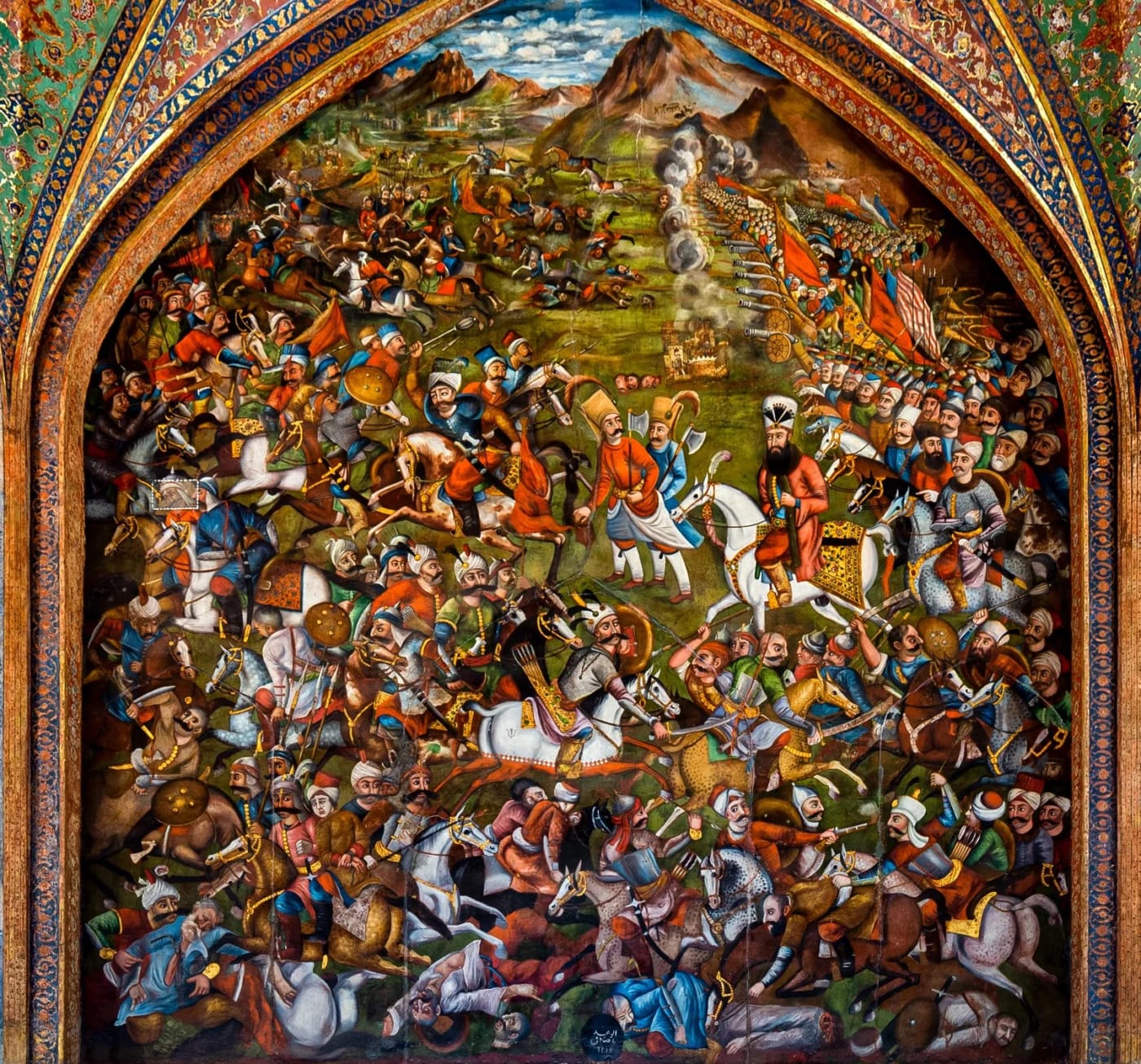
Sultan Selim led an army of 100,000 men into Iran with the explicit goal of overthrowing the “heretical” Safavid state. Before the Battle of Chaldiran in 1514, Ismail had never lost a battle. While Ismail’s Qizilbash soldiers fought with fanatical devotion, believing the Shah was divine and invincible, the Ottomans had a modern professional army equipped with cannons and muskets. The Safavid cavalry was decimated by Ottoman gunpowder. Ismail was wounded and barely escaped capture.
The defeat shattered Ismail’s aura of divinity. He fell into a deep depression, stopped leading his troops personally, and reportedly spent much of his remaining life in mourning or isolation. Ismail was notorious for his heavy drinking, which became a central part of his life following his psychological collapse after the lost battle. He reportedly spent his final decade in a “drunken stupor” and died at the age of 36 from internal organ damage caused by chronic alcoholism.
The battle changed how Shi’ism was practiced in Iran: Because the Shah’s “divine” status was damaged, the state leaned more heavily on the imported Arab scholars mentioned earlier. They shifted the focus from the mystical, fanatical worship of the Shah toward a more structured, legalistic form of Twelver Shi’ism. The defeat forced the Safavids to realize they couldn’t simply conquer the Sunni world through religious zeal. They had to build a stable, bureaucratic state that could survive long-term against the Ottoman superpower.
The battle effectively “drew the line” in the sand. The victory allowed the Ottomans to annex Eastern Anatolia and Iraq, creating a permanent territorial and religious border between Sunni Ottoman Turkey and Shia Safavid Iran.
After the defeat at Chaldiran and his father’s subsequent withdrawal from public life, Shah Tahmasp I (reigned 1524–1576) inherited an empire on the brink of collapse. During his 52-year reign he transformed the state from a radical cult into a stable, bureaucratic power.
He moved the capital from Tabriz (too close to the Ottoman border) to Qazvin in the interior, making the government less vulnerable to invasion. Tahmasp faced constant invasions from the Ottoman Empire under Suleiman the Magnificent. Knowing he couldn’t win a direct battle against their superior gunpowder, he used “scorched earth” tactics, destroying crops and poisoning wells as he retreated, leaving the massive Ottoman armies to starve in the Iranian winters. The Peace of Amasya (1555) was a landmark treaty that finally recognized Safavid sovereignty and brought 20 years of peace, allowing the Shia identity to truly take root without constant war.
In 1556, Shah Tahmasp I signed formal edicts prohibiting alcohol, hashish, gambling, and music. His bans were also political; they were aimed at the Qizilbash tribes, whose traditional rituals often involved heavy drinking, dancing, and music that the Shah now considered un-Islamic and disorderly. This pushed drinking – a public ritual before – into the private “underground”.