Written by Hannah Babar Mubarak
The fall of Constantinople in 1453 was one of the most dramatic moments medieval history. After weeks of intense fighting, the Ottoman army led by Sultan Mehmed II finally broke through the massive walls that had protected the city for centuries. Among the many soldiers who took part in the final assault, one name has been remembered for generations: Ulubatlı Hasan. According to Ottoman accounts, he was the brave soldier who climbed the city walls under heavy attack and raised the Ottoman flag, an act that symbolized both courage and the turning point of the battle.

Who Was Ulubatlı Hasan?
Ulubatlı Hasan was an Ottoman soldier believed to have come from the village of Ulubat near Bursa, which is where his name originates. Very little is known about his early life, as historical records about him are limited. Like many young men of his time, he joined the Ottoman army and served under Sultan Mehmed II, the ruler who sought to capture the powerful city of Constantinople. The Ottoman military was made up of thousands of soldiers from different regions, all united under the goal of expanding the empire. Among these warriors was Hasan, whose courage during the siege would later become part of one of the most famous stories associated with the conquest of the city.
The Siege of Constantinople
By the mid-fifteenth century, Constantinople was still one of the most important cities in the world. Once the great capital of the Byzantine Empire, it stood between Europe and Asia and controlled important trade routes. At the time, the city was ruled by Emperor Constantine XI, the last Byzantine emperor. Although the empire had grown much smaller than it once was, the city’s famous defensive walls still made it incredibly difficult to capture. When Sultan Mehmed II came to power, he set his sights on conquering Constantinople and making it the new centre of the Ottoman Empire. In 1453, Ottoman forces surrounded the city with a large army and powerful cannons. For weeks the defenders fought hard to protect the walls, but the pressure continued to build as the Ottomans prepared for the decisive assault.
The Final Assault on the City
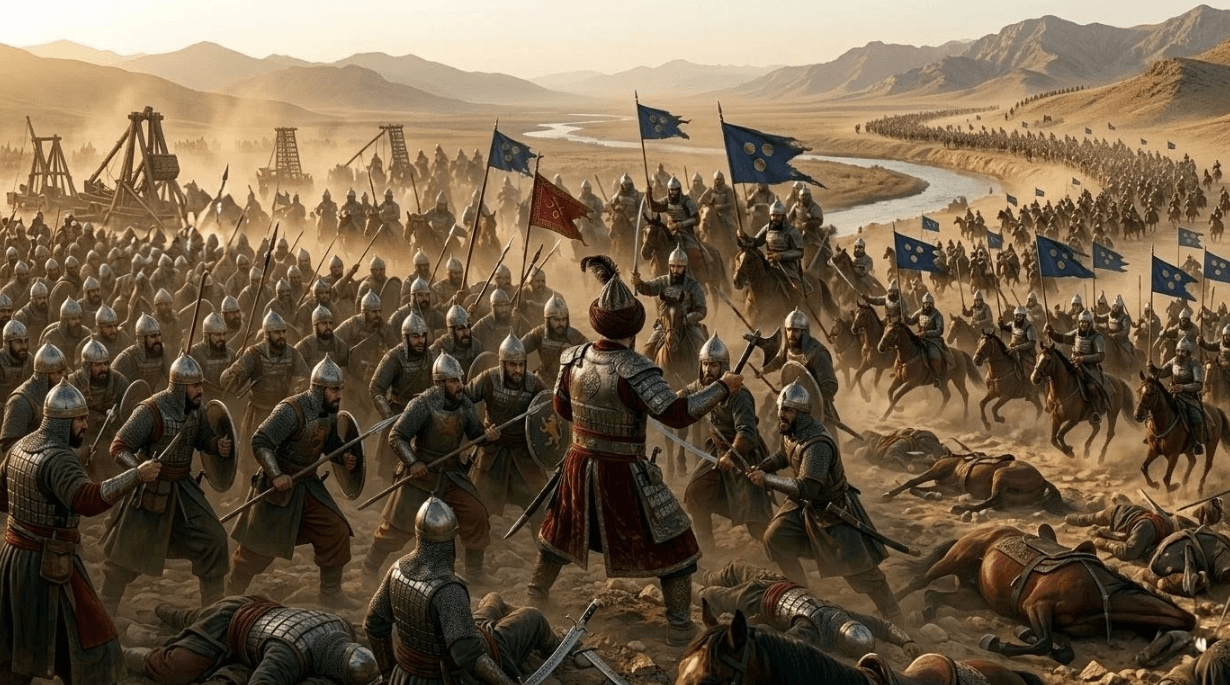
After weeks of fighting and constant bombardment, Sultan Mehmed II ordered a final assault on Constantinople in the early hours of 29 May 1453. Ottoman forces attacked the city walls in several waves, hoping to overwhelm the exhausted defenders. The Byzantine soldiers, led by Emperor Constantine XI, fought fiercely to protect the gates and towers, knowing that the fate of their city depended on holding the walls. As the battle intensified, ladders were raised against the massive defences and soldiers struggled to climb up while arrows, stones, and other weapons rained down from above. The fighting was chaotic and brutal, with both sides pushing with all their strength as the decisive moment of the siege unfolded.
Ulubatlı Hasan on the Walls
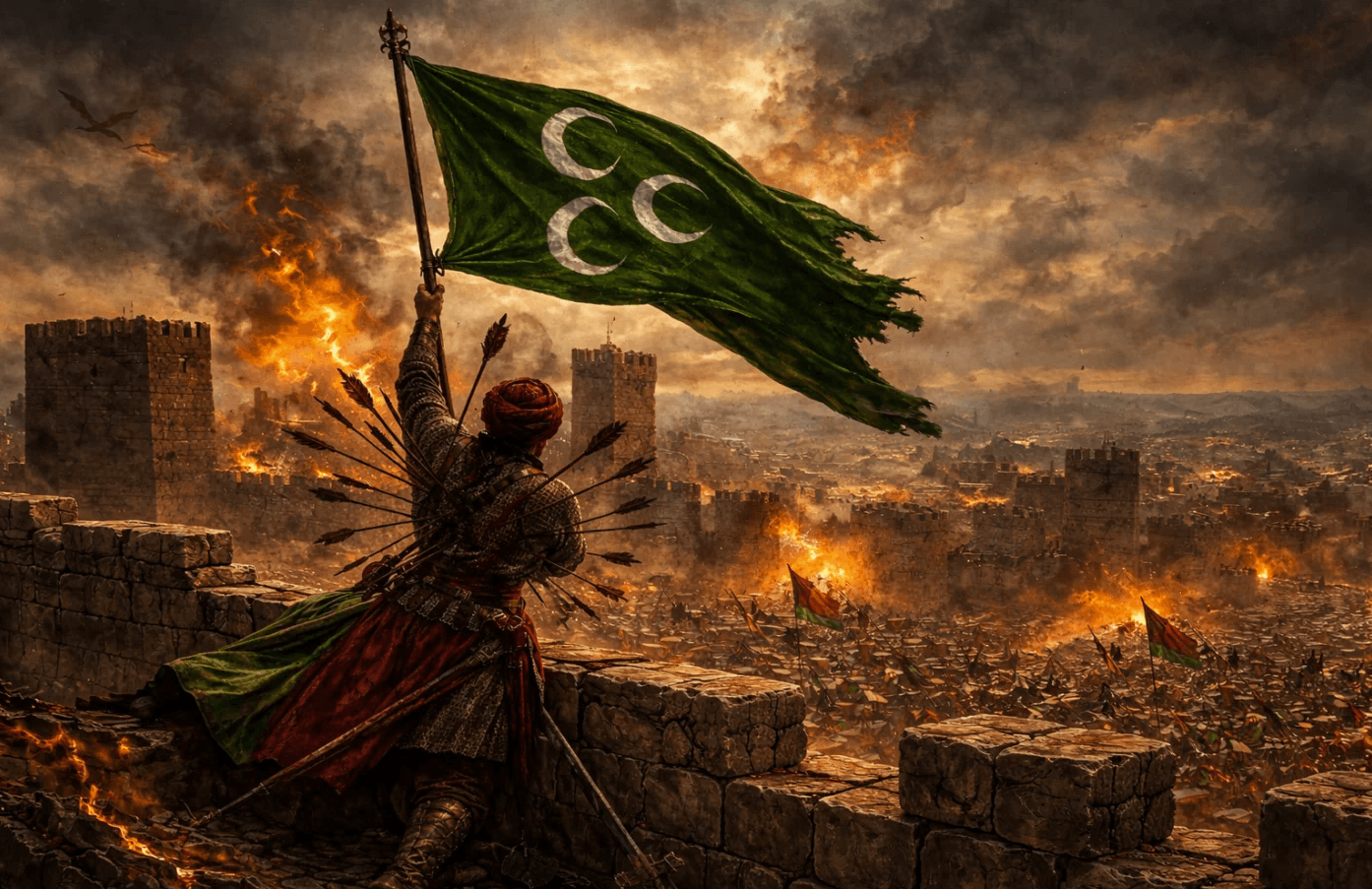
Amid the chaos of the final attack, one Ottoman soldier pushed forward with remarkable determination. Ulubatlı Hasan advanced toward the city walls carrying the Ottoman flag while fighting through heavy resistance from the defenders above. According to Ottoman accounts, he managed to climb the walls despite arrows and stones being thrown down by Byzantine soldiers. Reaching the top, he planted the flag, a powerful signal that encouraged the attacking forces below. The moment came at great cost, as he was severely wounded during the struggle. Even so, the sight of the flag raised above the walls helped inspire the Ottoman troops as they continued their advance into the city.
The Death of Ulubatlı Hasan
The moment did not last long. After reaching the top of the walls and planting the Ottoman flag, Ulubatlı Hasan became the focus of fierce attacks from the defenders. According to Ottoman accounts, he was struck by many arrows, often said to be around twenty-seven, as well as stones and other weapons thrown from the walls. Despite his injuries, the flag had already been raised, signalling that the Ottoman forces were gaining ground. Severely wounded, Hasan eventually collapsed on the walls during the fighting near the area of Romanos Kapısı, where some of the fiercest clashes of the siege were taking place. He is believed to have been about twenty-five years old at the time of his death. His actions took place during the final moments of the battle, as Ottoman troops began breaking through the city’s defences and the long siege of Constantinople finally came to an end.
The Legacy of Ulubatlı Hasan
In the centuries following the conquest of Constantinople, the story of Ulubatlı Hasan continued to be told and remembered. His bravery during the final assault became a powerful symbol of courage and sacrifice in Ottoman and later Turkish historical memory. Over time, his name began to appear in books, historical narratives, and cultural traditions connected to the events of 1453. Across Turkey, several streets, schools, and public places have been named after him, keeping his story alive for new generations. In Istanbul, a statue of Ulubatlı Hasan stands as a tribute to the young soldier who is said to have climbed the city walls during the siege. These memorials serve as reminders of the role he played in one of the most significant battles of the fifteenth century. Through monuments, place names, and historical writing, the memory of Ulubatlı Hasan has continued to endure long after the battle in which he lost his life.
References used: