
When we look at the food of modern Turkey and its neighbours, we are really seeing the history of the Ottoman Empire on a plate. For hundreds of years, this vast empire brought together people from the Middle East, the Mediterranean, and the Balkans. As these cultures mixed, so did their ingredients. The result was a cuisine that took the best traditions from three continents and refined them into something unique.
In Ottoman times, food was central to daily life. It was used to show hospitality to guests and to celebrate religious holidays. While the Sultan’s palace in Istanbul was famous for its massive kitchens and elaborate banquets, the real heart of this cuisine was found in the homes of everyday people. The recipes were passed down through generations, focusing on fresh ingredients and careful preparation.
A traditional meal in this style often begins with a selection of small dishes known as meze. These are meant to be shared, allowing everyone at the table to sample different flavors while they talk. One of the most cherished dishes in this spread is yaprak sarma, or stuffed grape leaves. Making this dish is a true labour of love. The cook must gently roll rice, herbs, and spices into a tender vine leaf, creating a small, neat cylinder. It takes patience and skill, and it is a perfect example of the attention to detail that defines this style of cooking
A Feast Fit for a Sultan
Hünkar Beğendi is a classic Ottoman dish whose name means “The Sultan liked it,” reflecting its legendary status as a favourite of Sultan Mehmed II.
The dish features smoky, creamy roasted eggplant purée mixed with béchamel sauce and sometimes cheese, creating a rich, velvety base. On top of this sits tender, slow-cooked meat, usually lamb or beef, simmered with onions, tomatoes, and aromatic spices. The combination of the smoky eggplant and flavourful meat makes it both hearty and luxurious a true reflection of Ottoman palace cuisine and why it became associated with the tastes of a sultan.
After the starters, the meal moves to heartier comfort foods. Pastries played a huge role in the Ottoman diet, particularly börek, a flaky dough filled with cheese, spinach, or meat. Grains were also essential, especially bulgur, or cracked wheat, which was often served alongside stews or mixed into salads to balance the richness of the meat. When it came to main courses, the Ottomans were experts at grilling, giving us famous dishes like the spicy Adana kebab. But they also valued simple, warming foods like Ezo Gelin soup, a red lentil soup that is still a favourite comfort food today.
[/et_pb_text][et_pb_image src=”https://royalottomans.com/storage/the-taste-of-an-Empire-ottoman-cuisine.jpg” _builder_version=”4.27.5″ _module_preset=”default” theme_builder_area=”post_content” title_text=”the taste of an Empire ottoman cuisine” hover_enabled=”0″ sticky_enabled=”0″][/et_pb_image][et_pb_text _builder_version=”4.27.5″ _module_preset=”default” theme_builder_area=”post_content” hover_enabled=”0″ sticky_enabled=”0″]Desserts of the imperial state
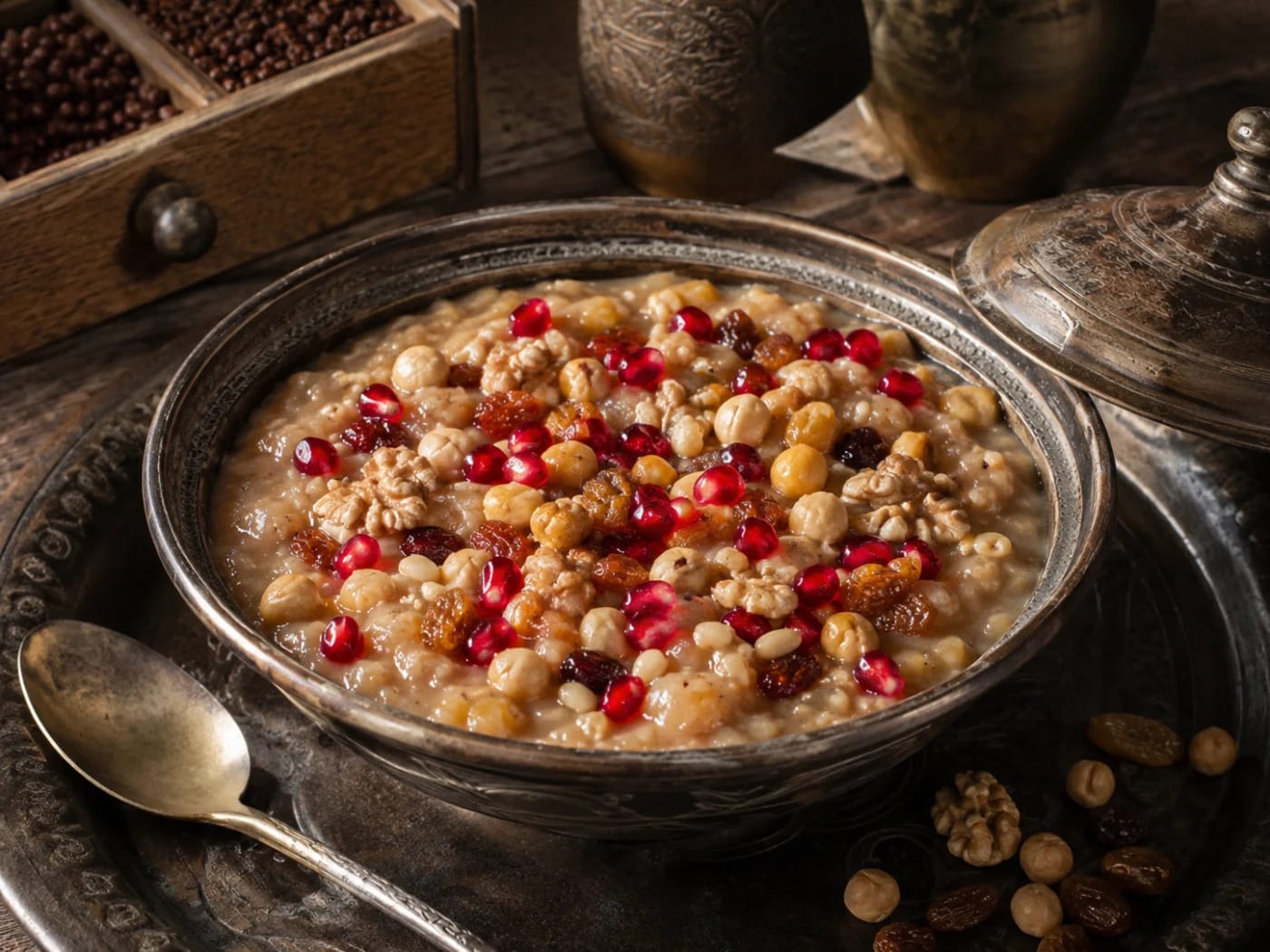
The sweets are perhaps the most famous part of this culinary heritage. Baklava is the best known, featuring incredibly thin layers of dough stacked with nuts and soaked in syrup. But the Ottoman kitchen was also a place of experiment. One of the most unusual desserts is Baklava is a rich, sweet pastry that is a hallmark of Ottoman and Middle Eastern cuisine. It is made by layering thin sheets of phyllo dough with chopped nuts, such as pistachios, walnuts, or almonds, and brushing each layer with butter. There is also aşure, or Noah’s Pudding, a mix of grains, fruits, and beans that is traditionally cooked in large batches to share with neighbours as a symbol of community.
Tavuk Göğsü is one of the most unique and famous desserts of Ottoman cuisine, and it literally means “chicken breast” in Turkish. Despite its unusual main ingredient, the dish is a delicate milk pudding made by finely shredding cooked chicken breast and mixing it with milk, sugar, and rice flour or starch until smooth and creamy. The chicken is virtually undetectable in the final dessert; instead, it gives the pudding a silky texture and subtle richness. Traditionally, it is flavoured with a hint of vanilla or cinnamon and served chilled, often as a luxurious treat in Ottoman palaces.
Sweet Drinks of legacy
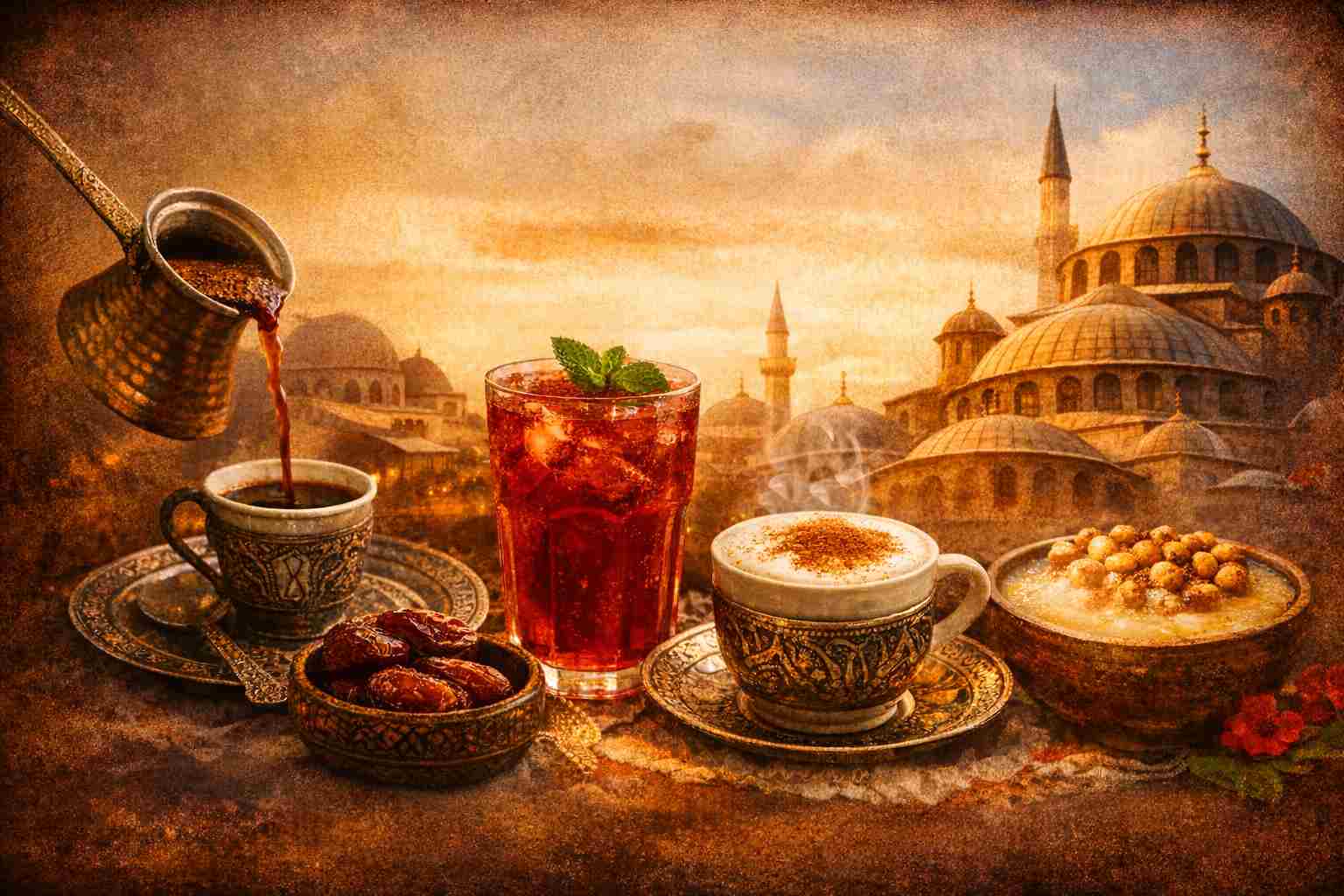
To finish such a rich meal, people would typically drink şerbet. Unlike the frozen dessert with a similar name, this was a refreshing drink made from fruit juices and flowers, such as rose or plum. It was the perfect way to cleanse the palate.
Osmanlı Şerbeti was a popular drink in the Ottoman Empire, especially in the royal courts, known for its refreshing and aromatic qualities. It is a sweet, lightly spiced beverage made by mixing fruit juices, flower waters (like rose or orange blossom), and sugar, often served chilled or over ice. Ingredients could include pomegranate, quince, or sour cherry, sometimes with added spices such as cinnamon, cloves, or cardamom, giving it a fragrant and slightly exotic flavour. Served to guests as a symbol of hospitality or during special occasions, Osmanlı Şerbeti was more than just a drink it was a luxurious taste of Ottoman tradition, blending natural flavours with artistry and elegance.
Limonata is a refreshing drink made from freshly squeezed lemons, water, and sugar, often served chilled or over ice. Its bright, tangy flavour is both thirst-quenching and invigorating, making it a popular beverage in warm climates. In traditional recipes, a hint of mint or sparkling water may be added to enhance the taste and aroma. Limonata was enjoyed in Ottoman times as a cooling drink during the hot summer months, and it remains a beloved staple in Turkish cafés and homes today.
Ottoman cuisine is vast, with hundreds of recipes that we haven’t even touched on here. But at its core, it is a tradition built on sharing and patience. It reminds us that food is one of the best ways to bring people together, a lesson that has survived for centuries.
Resources used:
https://www.turkishfoodtravel.com/2022/07/18/turkish-pistachio-baklava-recipe/
https://www.turkishfoodtravel.com/category/recipes/ottoman-dishes/
https://en.wikipedia.org/wiki/Ottoman_cuisine
https://blog.turkishairlines.com/en/traditional-turkish-cuisine/
https://istanbulgrillorlando.com/turkish-food/sultan-s-diet-10-delicious-ottoman/
https://goturkishfood.com/ottoman-cuisine/
https://www.turkishfoodtravel.com/2025/04/01/homemade-lemonade-concentrade/
Hannah Babar Mubarak is an independent writer and researcher with a focus on Islamic and Ottoman history. Her work investigates the social, religious, and cultural context of Anatolia during the formative years of the Ottoman empire.
Written by Hannah Babar Mubarak
[/et_pb_text][/et_pb_column][/et_pb_row][/et_pb_section]