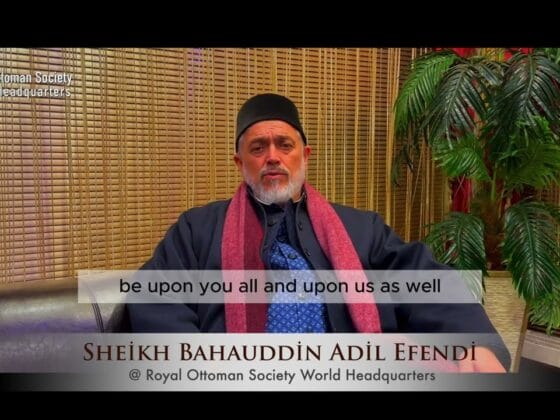
In this heartfelt teaching the Royal Ottoman Society revisits the Qur’anic story of Prophet Lut (peace be upon him) and draws striking parallels between the ancient transgression of his people and the turmoil that surrounds our world today. By reflecting on the moral depths of Lut’s narrative, we are reminded of the enduring call to uphold justice, protect the vulnerable, and remain steadfast on the straight path.
The Qur’anic Narrative of Prophet Lut
The community is reminded that the nation of Lut was not a distant myth but a living reality recorded in many verses of the Qur’an. Their sin lay not merely in idolatry but in the systematic abuse of travelers who passed through their town. According to the scripture, these people would seize strangers, imprison them and subject them to sexual violence—an act described as an unprecedented “filth” that had never before been witnessed.
When Prophet Lut (peace be upon him) confronted his tribe, he urged them to cease this depravity: “Leave these wicked deeds; we have no dealings with women in this manner; we will not deviate from the path of Allah.” The Qur’an recounts that despite Lut’s pleas, the people persisted, culminating in a divine punishment that wiped out the entire community.
History and Divine Retribution
The talk emphasizes that the town of Lut was modest—home to roughly three to five thousand inhabitants—and situated along a trade route. When their rebellion reached its climax, Angel Jibril (peace be upon him) delivered Allah’s decree, causing the earth to split open and the sea level to sink two thousand metres below normal, creating what is known today as the Dead Sea. The depth of that devastation was such that even microorganisms could not survive there, underscoring the absolute nature of divine retribution.
Parallels with Our Contemporary World
The speaker then turns our gaze toward present‑day crises—war in Ukraine, conflict between Russia and its neighbors, the ongoing Palestine–Israel strife, economic instability, lingering effects of pandemics, and other calamities. In each case, humanity confronts a moral crossroads reminiscent of Lut’s era: societies grappling with violence, oppression, and disregard for the sanctity of life.
Just as the people of Lut chose to violate strangers’ dignity, modern conflicts often see civilians bearing the brunt of aggression. The teaching invites us to ask: Are we witnessing a repeat of ancient transgression on a global scale? By recognizing these patterns, we are called to embody compassion, uphold justice, and resist any form of oppression that mirrors the sins condemned in the Qur’an.
A Call to Reflect and Act
The Royal Ottoman Society encourages all seekers to contemplate Lut’s story not merely as a historical account but as an ever‑present warning. Let us strengthen our resolve to protect those who are vulnerable, to speak against injustice wherever it arises, and to remain guided by the timeless principles of mercy and righteousness.
For those wishing to deepen their understanding through communal practice, we invite you to explore our live meetings, where seekers can take Bayah, engage in heartfelt zikr, and walk together on the Sufi path.
— The Royal Ottoman Society