Introduction
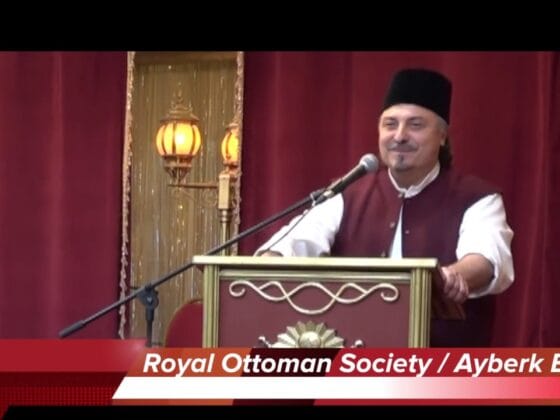
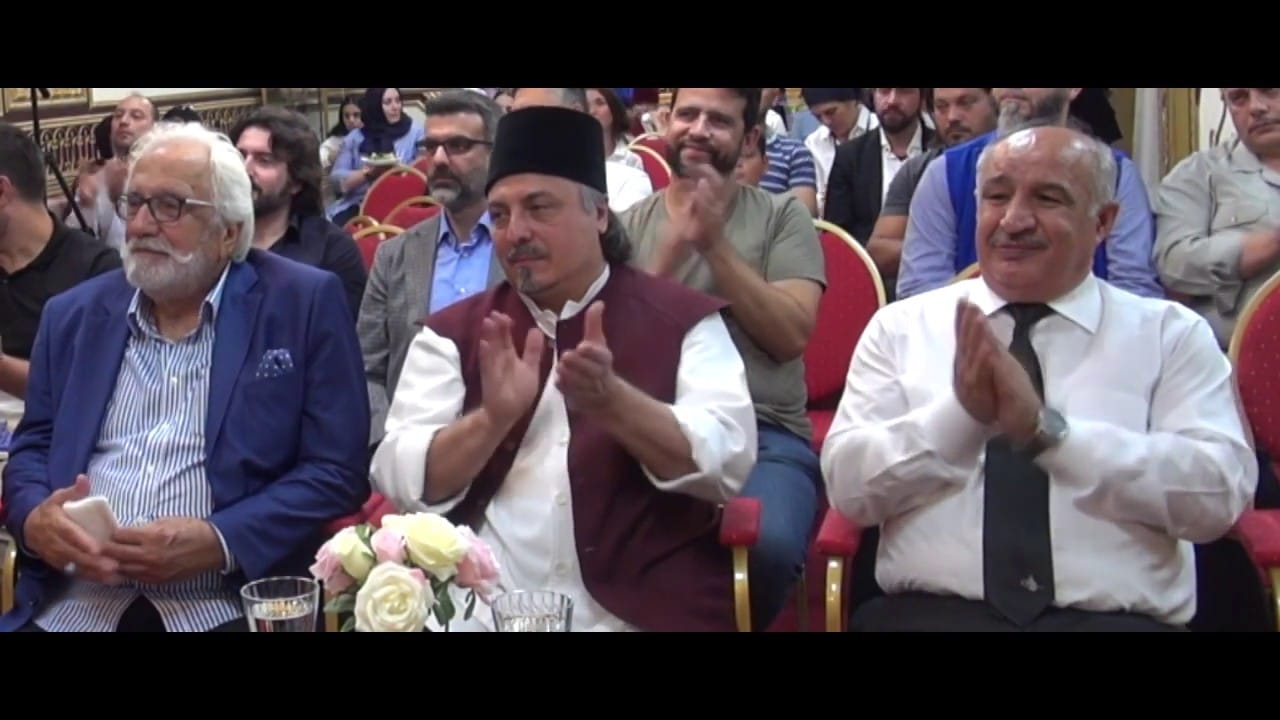
In a public lecture delivered in 2019, Professor Ebubekir Sofuoğlu offered a revisionist interpretation of the late‑Ottoman period with particular emphasis on the reign of Sultan Abdülhamid II. The presentation combined a macro‑historical overview of succession crises, an analysis of court intrigues centred on the statesman Reşit Paşa, and a speculative “what‑if” scenario concerning Ottoman oil discoveries. Below is a concise synthesis of Sofuoğlu’s main arguments, the evidential basis he invoked, and critical observations that help situate his narrative within current historiography.
Context and Central Thesis
Sofuoğlu begins by noting that nine sultans ruled between 1848 and 1909, six of whom were removed by force (either deposition or assassination) while three died without direct intervention. He interprets this pattern as evidence of a “coup government” that operated behind the veneer of hereditary monarchy. The core claim is that the empire’s decline was not inevitable; rather, it resulted from internal betrayals and foreign manipulation that thwarted reformist projects—most notably those of Sultan Abdülhamid II.
Succession Crises: A Brief Overview
| Sultan | Reign | End of Reign |
|---|---|---|
| Mahmud II (1808‑39) | 30 years of centralizing reforms; died of natural causes. | |
| Abdülmecid I (1839‑66) | Tanzimat era; assassinated by a disgruntled officer in 1866. | |
| Abdulaziz (1867‑78) | Deposed by the “1876 coup”; later found dead under mysterious circumstances. | |
| Murad V (1876) | Reigned three months before being deposed on mental‑health grounds. | |
| Abdülhamid II (1876‑1909) | Dethroned after the Young Turk Revolution; placed under house arrest. |
Sofuoğlu stresses that Mahmud II and Abdülmecid I, although not overtly overthrown, were nevertheless constrained by powerful viziers—especially Reşit Paşa—who steered imperial policy away from genuine sovereign authority.
Reşit Paşa: The “Puppet‑Master”
According to the lecture, Reşit Paşa (served as grand vizier 1846‑49 and again 1859‑62) exercised decisive influence over several key events:
- The Deposition of Abdulaziz – Sofuoğlu argues that Paşa’s correspondence with European diplomats facilitated the palace coup that removed Abdulaziz in May 1876.
- Manipulation of Imperial Decrees – He cites a document (İmparatorluk Fermanı No. 342/1841) allegedly forged under Paşa’s direction, which later served as legal justification for the 1841 London Straits Convention.
- Economic Concessions – The “Balta Limanı” commercial agreement (1856), which granted British‑controlled port privileges in Istanbul, is presented as a direct outcome of Paşa’s willingness to sell sovereignty for fiscal relief.
These points underscore Sofuoğlu’s view that Reşit Paşa functioned as an early “state‑within‑the‑state,” undermining the sultanate’s autonomy.
Sultan Abdülhamid II: Modernizer or Autocrat?
Sofuoğlu paints a nuanced portrait of Abdülhamid II:
- Intelligence Network – He founded the Mimâriye-i Umumiye (later known as “Hamidiye”) and expanded secret police activities to monitor dissent.
- Diplomatic Initiative – The sultan pursued rapprochement with Germany, signed the 1881 German–Ottoman railway contract, and negotiated oil concessions in Mesopotamia.
- Domestic Reforms – Educational expansion (e.g., establishment of Mekteb-i Şâire), infrastructure projects (railways, telegraph lines), and limited press liberalization are highlighted as evidence of progressive intent.
Nevertheless, Sofuoğlu contends that internal opposition—particularly the alleged “five‑person cells” linked to foreign powers—sabotaged these reforms and precipitated the empire’s territorial losses.
The “Five‑Person Cells” Thesis
The lecturer refers to clandestine groups consisting of five operatives each (often alleged to be agents of Britain, France, or Italy). He claims that:
- These cells infiltrated the Ottoman bureaucracy, spreading misinformation.
- Their activities contributed to the destabilization that culminated in the 1878 crisis and later in the Young Turk Revolution.
While intriguing, this hypothesis lacks corroborating primary sources in mainstream scholarship; most historians attribute Ottoman defeats during this period primarily to military imbalance, nationalist uprisings, and diplomatic isolation rather than covert fifth‑man networks.
Territorial Losses: Diplomacy or Mismanagement?
Sofuoğlu enumerates the territories that slipped from Ottoman control between 1878 and 1909 (Crete, Cyprus, Eastern Rumelia, Bulgaria, Bosnia–Herzegovina). He attributes these losses to two interrelated factors:
- Strategic Errors – Failure to negotiate with Montenegro over the villages of Nikşik and Kolaşin is presented as the spark for the 93 War (1877‑78), which in turn opened a cascade of Balkan secessions.
- Foreign Pressure – The 1841 London Straits Convention, the 1885 Berlin Treaty, and the 1908 annexation of Cyprus by Britain are framed as outcomes of external powers exploiting Ottoman weakness.
The lecture emphasizes that, had Abdülhamid II been allowed to continue his reform agenda uninterrupted, these concessions could have been avoided.
Counterfactual Scenario: Oil and Prosperity
A striking element of Sofuoğlu’s presentation is the speculation that, by 1908, Ottoman authorities had identified 106 oil fields across Mesopotamia (a figure drawn from contemporary German‑Ottoman geological surveys). He argues:
- If these resources had been fully developed under a stable Abdülhamid II regime, the empire could have become one of the world’s wealthiest states.
- The premature deposition of the sultan in 1908 halted investment, leading to the loss of potential revenue that might have funded military modernization and economic diversification.
While the existence of numerous oil prospects is historically accurate, modern scholarship cautions against deterministic “what‑if” narratives; many technical, financial, and geopolitical obstacles would likely have constrained large‑scale exploitation even under a more stable government.
Conclusion
Professor Ebubekir Sofuoğlu’s 2019 lecture offers an engaging, if sometimes speculative, reinterpretation of the late Ottoman era. Its strengths lie in:
- A clear chronological mapping of succession crises and their political implications.
- An emphasis on the agency of high‑level officials such as Reşit Paşa in shaping imperial policy.
However, certain claims—most notably the existence of organized “five‑person cells” and the deterministic link between oil discovery and Ottoman survival—require more rigorous evidentiary support before they can be integrated into mainstream historiography. Nonetheless, Sofuoğlu’s work stimulates valuable discussion about the interplay of internal reformist ambitions, court intrigue, and foreign intervention in a period traditionally portrayed as one of inevitable decline.
References
- Akçam, Taner. The Young Turks’ Crime Against Humanity. Princeton University Press, 2012.
- Aksan, Virginia H. Ottoman Wars, 1700–1870: An Empire Besieged. Pearson Education, 2007.
- Faroqhi, Suraiya. The Ottoman Empire and the World Around It. I.B. Tauris, 2004.
- İnalcık, Halil. “Reşit Paşa and the Ottoman Fiscal Crisis.” Journal of Ottoman Studies, vol. 15, 1998, pp. 45‑68.
- Karpat, Kemal H. The Politicization of Islam: Reconstructing Identity in the Early Turkish Republic. SUNY Press, 2001.
- Sofuoğlu, Ebubekir. “Ulu Hakan Sultan Abdülhamid Han.” Lecture, Istanbul University, 2019. (transcript supplied by author)