Written by: Hannah Babar Mubarak
Turkish coffee is often seen as a drink, but it is better described as a practice influenced by time and tradition. Its preparation is careful, serving follows specific rules, and consumption is rarely rushed. From its early arrival in Ottoman cities, coffee became part of daily life and developed into a unique style: finely ground, unfiltered, and served in small cups.
In this manner, Turkish coffee became more than just a refresher. It represented taste, skill, and hospitality.
The Legendary History of Türk Kahvesi
Türk Kahvesi has a history that starts not in palaces, but along the dusty trade routes linking the Ottoman Empire to Yemen. In the sixteenth century, coffee beans appeared in Istanbul as a curious novelty, a bitter drink that fascinated merchants and scholars alike. It didn’t take long for this foreign beverage to embed itself in everyday life. By the time of Sultan Suleiman, the Magnificent, coffee had spread beyond the Sultan’s court, finding its spot in the lively neighbourhoods and bustling streets of the city. Coffeehouses, or kahvehane, quickly became the heart of social life, where people exchanged ideas, told stories, and formed friendships over thick, unfiltered cups.
Inside the Ottoman Coffeehouse
Stepping into an Ottoman coffeehouse, or kahvehane, felt like entering the city’s centre. The rooms were long, with low cushions lining the walls for comfortable seating in small groups. In the middle, a small stove brewed coffee in copper pots, while tiny cups were passed around with care. Coffeehouses served as conversation hubs where merchants, scholars, and neighbours shared news, exchanged stories, or played games like backgammon. Some even featured musicians or storytellers to entertain the guests. These spaces were more than just places to drink coffee; they were community spots where people gathered, exchanged ideas, and enjoyed each other’s company.
The Cezve and the Art of Turkish Coffee
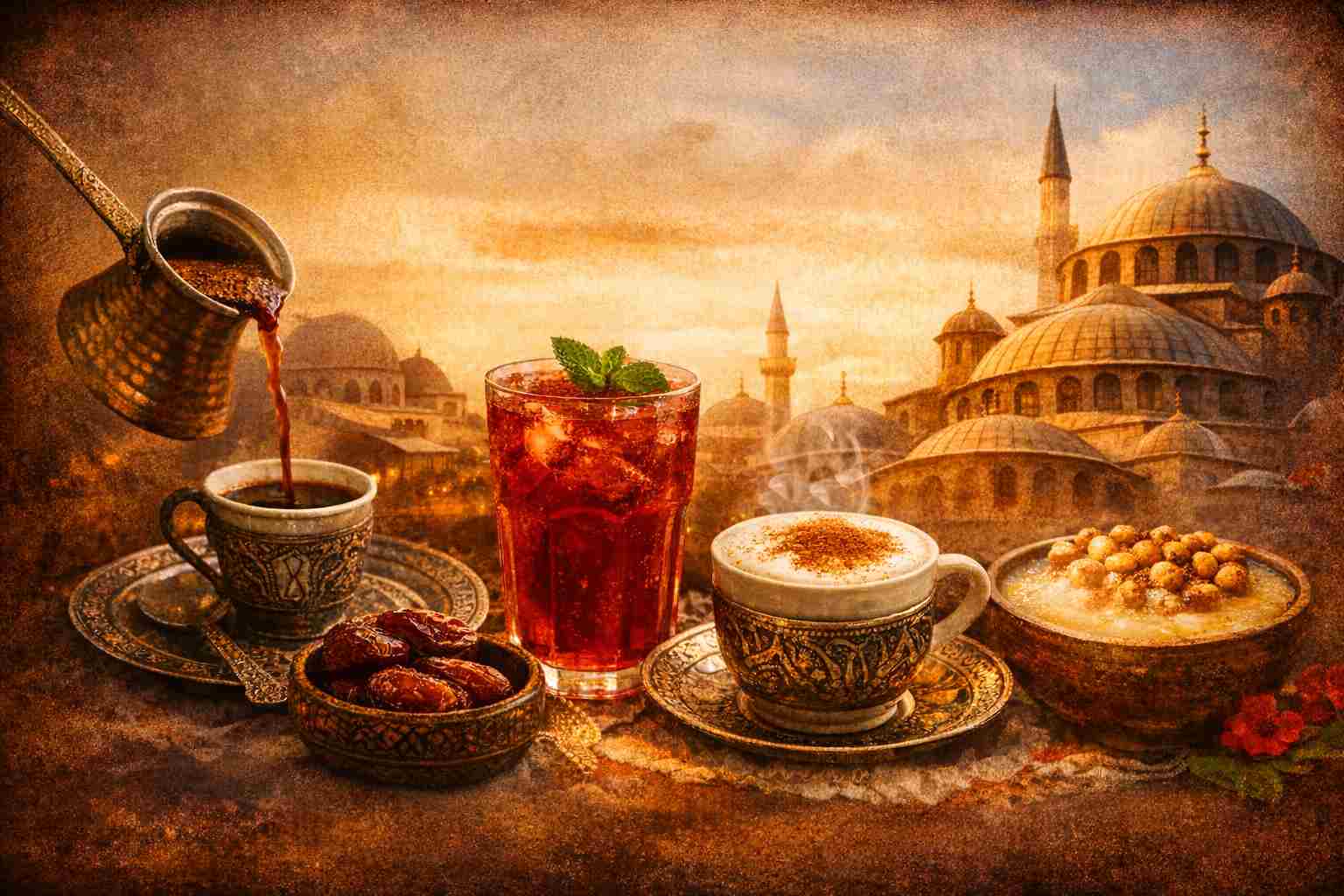
The cezve is essential to Turkish coffee, a small copper pot with a long handle meant for brewing the perfect cup. Making coffee with it is straightforward but requires attention. You mix finely ground coffee, cold water, and a bit of sugar, then heat it slowly over a gentle flame. As it begins to froth, the rich aroma fills the room, signalling that it is almost ready to serve. Timing is important; if you wait too long, it spills over, and if you don’t wait long enough, the flavour is weak. Using the cezve is not merely about making a drink; it is an art passed down through generations, embodying patience, hospitality, and culture.
[/et_pb_text][et_pb_image src=”https://royalottomans.com/storage/Ottoman-coffee.webp” _builder_version=”4.27.5″ _module_preset=”default” theme_builder_area=”post_content” title_text=”Ottoman coffee” hover_enabled=”0″ sticky_enabled=”0″][/et_pb_image][et_pb_text _builder_version=”4.27.5″ _module_preset=”default” theme_builder_area=”post_content” hover_enabled=”0″ sticky_enabled=”0″]A Moment of Happiness
There’s something quietly joyful about receiving a cup of Turkish coffee. The small, steaming cup, poured carefully from the cezve, carries more than just coffee; it carries attention, care, and a moment to pause. Whether shared among friends, offered to a guest, or enjoyed alone, that first sip brings warmth and calm. The thick, rich coffee, sometimes lightly sweetened, seems to pause time for a heartbeat, allowing people the chance to smile, chat, or simply relish the moment. In Ottoman homes and coffeehouses alike, these small cups became tiny vessels of happiness, connecting people across tables and hearts.
A Simple Ottoman Tradition
In Ottoman times, how a guest drank their coffee conveyed a subtle message. If a guest drank the small glass of water first, it meant they were ready to enjoy the coffee and often, that they were hungry. But if they sipped the coffee before the water, it indicated they were already full and perhaps just visiting for the company. These small gestures transformed a simple cup of coffee into a quiet language of hospitality, respect, and understanding. Each sip and order contributed to a shared rhythm, a gentle way to communicate without words and to make every visit meaningful.
What the Turkish Coffee is served with
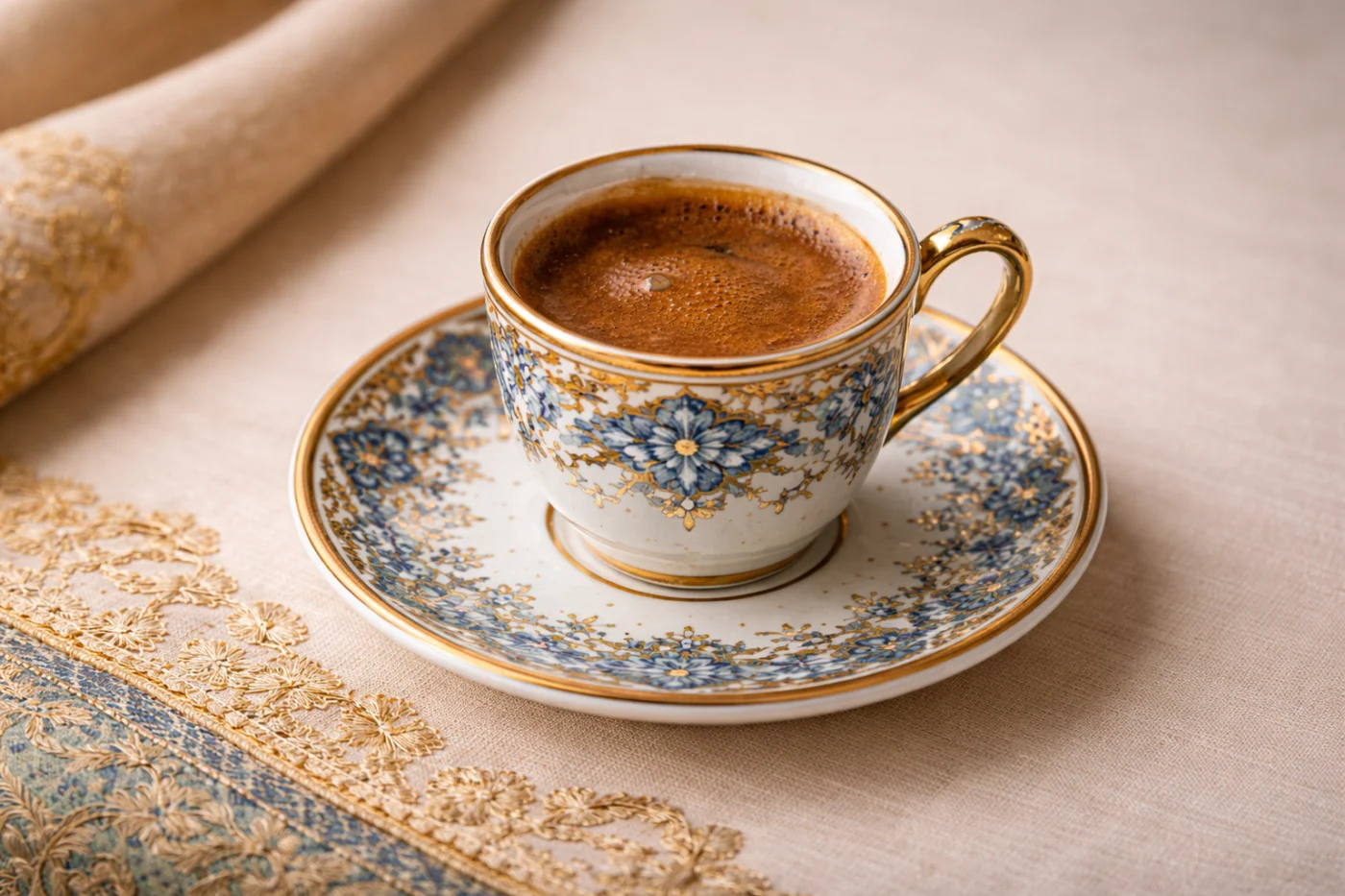
A cup of Turkish coffee seldom comes alone. Traditionally, it is served with a small glass of water, both to freshen the palate before sipping and as part of the hospitality tradition. It often includes a sweet treat, usually a piece of Turkish delight (lokum) or sometimes a small cookie to balance the coffee’s strong, bitter flavor. The coffee is typically placed on a small tray or saucer, with careful handling to keep the foam intact. These little additions elevate the coffee from a mere drink to a complete sensory experience, combining taste, smell, and sight in a moment of simple pleasure.
The Different Types of Turkish Coffee
While the basic way of making Turkish coffee stays the same, small variations lead to different experiences for the drinker. Some prefer it unsweetened, sade, allowing the bold, rich flavour to shine. Others enjoy a touch of sweetness, az şekerli, or moderate sweetness, orta, where sugar softens the bitterness and adds warmth. Those who like it sweeter choose heavily sweetened, şekerli, coffee, turning each sip into a small indulgence. Beyond sweetness, some people add subtle flavours like a pinch of cardamom or a hint of clove, giving the coffee a fragrant twist. These small differences matter, showing how local preferences and traditions shaped coffee into a unique cultural practice.
How to make Turkish Coffee
Making Turkish coffee is both simple and delicate, balancing a few ingredients with careful preparation. Start with finely ground coffee that is almost powder-like and add it to cold water in a small cezve, along with sugar if you prefer it sweet. Stir gently, then place the cezve over a low flame. Patience is key; the coffee must heat slowly until thick foam forms on top. Just before it boils, remove it from the heat, let the foam settle, and repeat if you want a stronger brew. Then, carefully pour the coffee into a small cup, foam first, and serve it with a glass of water and, if you like, a piece of Turkish delight. This process may take a few minutes, but that’s part of its charm. Each cup is made with care, and every sip becomes a moment to pause, enjoy, and share.
I hope this overview of Turkish coffee gives your insight into how a simple cup can hold so much life and meaning. From the precise brewing in the cezve to the tradition of the water and the shared moments across the table, each cup tells a story of connection, care, and small joys. Turkish coffee is more than just a drink; it is a tradition that unites people, honours patience, and transforms everyday moments into something special. I hope I’ve been able to share a bit of that warmth and happiness with you through these cups.
Resources used:
https://www.tastepak.com/p/turkish-coffee
https://www.lavazza.co.uk/en/coffee-secrets/turkish-or-cezve
https://www.thespruceeats.com/turkish-coffee-recipe-2355497
https://www.teaforturmeric.com/how-to-make-turkish-coffee-with-saucepan-option/
[/et_pb_text][/et_pb_column][/et_pb_row][/et_pb_section]