
For many centuries, Thessaloniki was not merely a city with a Jewish population; it was a Jewish city in the fullest sense of the word. Long before modern ideas of minority rights or multiculturalism, it stood as a rare example of a European urban center whose identity, economy, language, and rhythm of life were shaped primarily by Jews. Known as the “Jerusalem of the Balkans,” Thessaloniki was home to the largest Sephardic Jewish community in the world and, for more than three hundred years, the only major European city in which Jews formed the majority of the population.
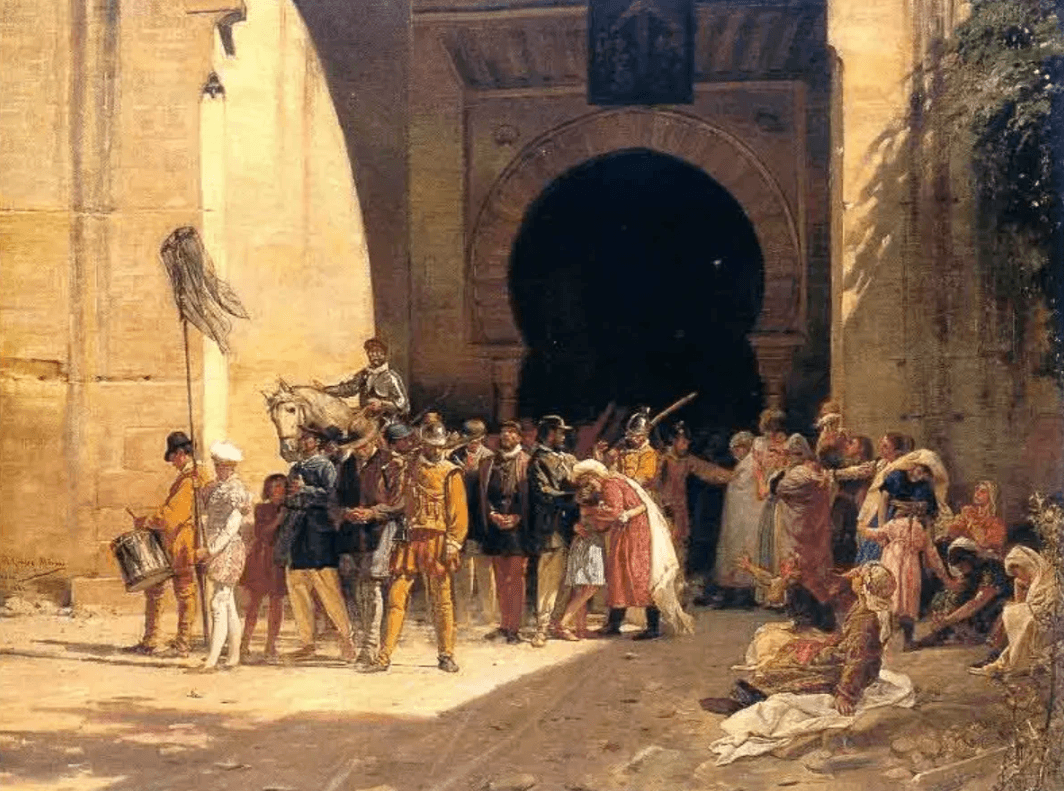
This remarkable story began in catastrophe. In 1492, the Catholic monarchs of Spain, Isabella and Ferdinand, issued the Alhambra Decree, ordering the expulsion of all Jews from their realms. Families who had lived in Iberia for centuries were suddenly forced to abandon their homes, professions, and communities. Tens of thousands fled across the Mediterranean, seeking safety wherever it could be found. Among the destinations that welcomed them, few would prove as significant as Thessaloniki, then a thriving port city within the Ottoman Empire.
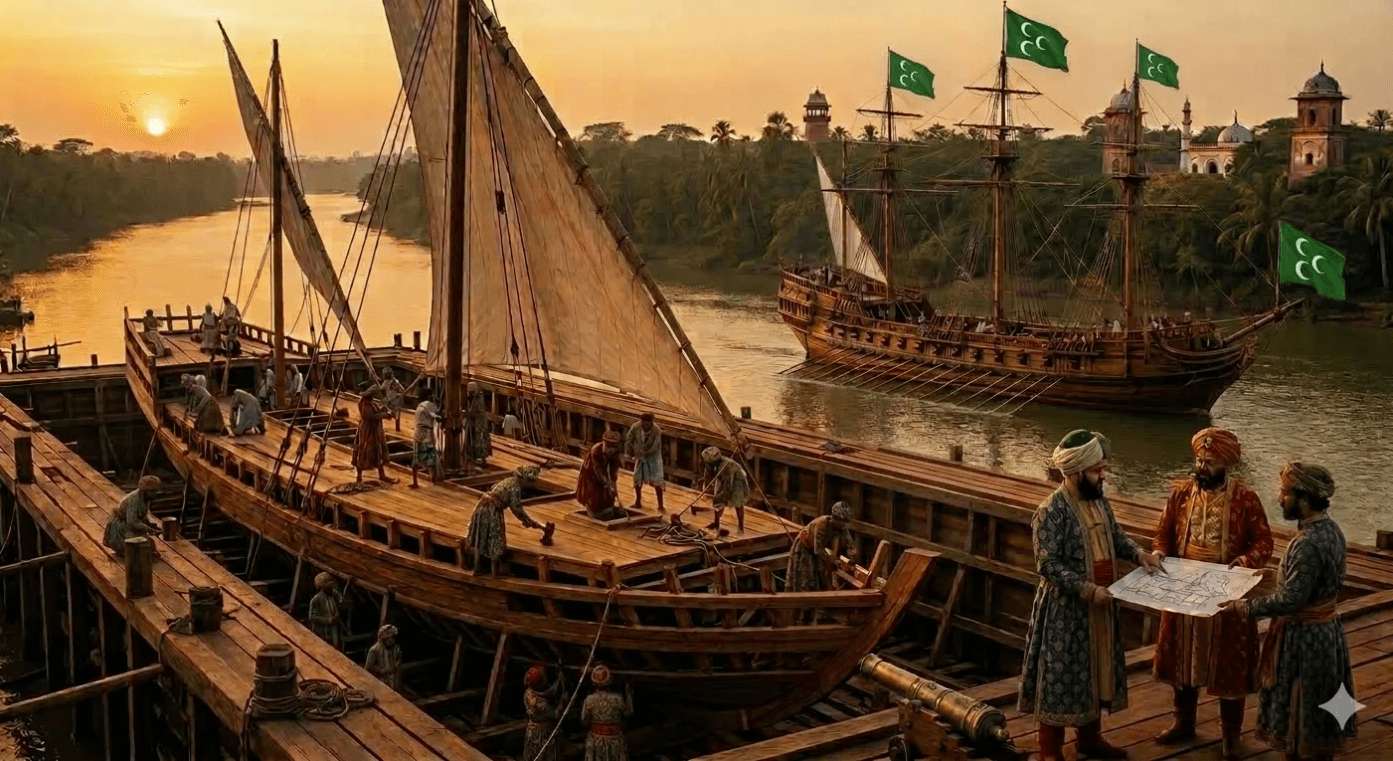
The Ottoman Sultan Bayezid II (because of his religiosity, he was called velī – friend of God), the son of Fâtih Sultan Mehmed, actively encouraged the arrival of the Sephardic exiles. Unlike many European rulers of the time, he recognized the economic and cultural potential of the displaced Jews. Bayezid sent out the Ottoman Navy to Spain in 1492 in order to evacuate them safely to Ottoman lands. He granted the refugees permission to settle in the Ottoman Empire and become Ottoman citizens.
Bayezid addressed a decree to all the governors of his European provinces, ordering them not only to refrain from repelling the Spanish refugees, but to give them a friendly and welcome reception. Moses Capsali, who was appointed chief rabbi of Ottoman Empire by Sultan Mehmed and has even been granted a seat in the divan beside the grand mufti, had helped to arouse Bayezid’s friendship for the Jews and actively assisted the exiles. 72 years old Capsali traveled to various Jewish communities in the Ottoman empire to collect funds and imposed a special tax, by the authority granted him by the Sultan, on Jewish communities, for the purpose of helping the Jewish refugees from Spain and to redeem refugees who had been captured by pirates.
The refugees brought with them valuable skills: they were physicians, printers, artisans, merchants, financiers, and diplomats. They spoke multiple languages and possessed commercial connections that spanned Europe, North Africa, and the Middle East.
Sultan Bayezid is said to have mocked the Spanish monarchs for impoverishing their own kingdom while enriching his—and history bore out his judgment.
In Thessaloniki, the Sephardic Jews did not simply integrate; they transformed the city. Within a generation, they had established the city’s first printing press, making Thessaloniki a major center of Jewish publishing and scholarship. Hebrew and Ladino books produced there circulated throughout the Ottoman world. Synagogues multiplied rapidly, eventually numbering more than forty. Each bore the name of a lost Iberian homeland—Castile, Aragon, Lisbon, Catalonia—turning the urban landscape into a map of collective memory.
[/et_pb_text][et_pb_image src=”https://royalottomans.com/storage/thessaloniki.webp” title_text=”thessaloniki” _builder_version=”4.27.5″ _module_preset=”default” global_colors_info=”{}” theme_builder_area=”post_content”][/et_pb_image][et_pb_text _builder_version=”4.27.5″ _module_preset=”default” global_colors_info=”{}” theme_builder_area=”post_content”]Demographically, the transformation was just as striking. By 1519, Jews made up more than half of Thessaloniki’s population. By 1613, that figure had risen to approximately 68 percent, a proportion unmatched anywhere else in Europe, either before or since. Christians and Muslims lived alongside them, but for centuries they were minorities in a city whose public life revolved around Jewish customs and institutions.
Daily life in Thessaloniki followed a distinctive rhythm shaped by religion. On Friday evenings, commerce slowed as the Jewish Sabbath approached. Markets and workshops remained largely closed on Saturdays, reopening only after nightfall. This observance existed alongside Muslim Friday prayers and Christian Sunday worship, creating a city that accommodated multiple religious calendars—but with Jewish life at its center. Ladino was the dominant spoken language, heard in markets, homes, and schools, while Hebrew flourished in religious and scholarly contexts.
Under Ottoman rule, the Jewish community enjoyed a high degree of autonomy through the empire’s millet system. Jewish courts handled civil disputes, rabbinical authorities oversaw education and family law, and communal institutions managed welfare and taxation. This autonomy allowed Thessaloniki’s Jews to develop complex social structures and a strong sense of collective responsibility. Far from being confined to a ghetto, they occupied every level of urban life.
Economically, Jews drove Thessaloniki’s rise as one of the Ottoman Empire’s most important ports. Jewish merchants dominated Mediterranean trade in wool, silk, ceramics, and tobacco. Jewish tailors supplied uniforms to the elite Janissary corps. Jewish bankers and brokers facilitated commerce between East and West. By the nineteenth century, Jewish entrepreneurs were at the forefront of industrialization, founding modern flour mills, textile factories, and brickworks.
Alongside this commercial elite stood a large Jewish working class. Jewish dockworkers did much of the port labor, while Jewish artisans supplied goods throughout the Balkans.
Culturally and intellectually, Thessaloniki emerged as one of the great centers of Sephardic civilization. Traditional religious schools coexisted with modern institutions established by organizations such as the Alliance Israélite Universelle, which introduced European languages—especially French—alongside Jewish studies.
By the early twentieth centuries the foundations of this world were beginning to shift. In 1912, during the Balkan Wars, Thessaloniki was captured by Greece and incorporated into the Greek state. For the Jewish community, this marked a profound turning point. They had flourished under Ottoman pluralism, but now found themselves suppressed by Greek nationalism as the city was increasingly defined as ethnically and culturally Greek.
Initially, the transition was cautious rather than hostile. Greek authorities recognized certain communal rights, including Sabbath observance, and even tolerated Zionist activity. But tensions simmered beneath the surface. Greek merchants resented long-standing Jewish dominance of trade, while many Orthodox Christians viewed the Jewish presence as a remnant of Ottoman rule rather than an integral part of the city’s future.
A devastating blow came in August 1917, when a small fire escalated into a massive inferno that burned for 32 hours. Two-thirds of Thessaloniki were destroyed. The Jewish quarters were especially hard hit. Most catastrophic was the loss of the community’s archives, which contained centuries of records documenting Jewish life in the city. In a single event, the documented memory of one of the world’s great Jewish communities was erased.
The fire left 70,000 people homeless, the majority of them Jews. Many emigrated, unable to rebuild their lives. Half the Jewish population left the city. Further demographic change followed in 1923, when a population exchange between Greece and Turkey brought tens of thousands of Greek Orthodox refugees to Thessaloniki. For the first time in nearly four hundred years, Jews became a minority in the city they had shaped.
What followed during World War II was swift and catastrophic. After the German occupation in 1941, the Jewish community was subjected to persecution, dispossession, and ultimately deportation. In the spring and summer of 1943, nearly the entire Jewish population of Thessaloniki was sent to Auschwitz-Birkenau. Only a tiny fraction survived. Today, Thessaloniki bears little visible trace of its former identity as the world’s largest Sephardic Jewish city.
Written by Hamza Abu Ahmed
[/et_pb_text][/et_pb_column][/et_pb_row][/et_pb_section]