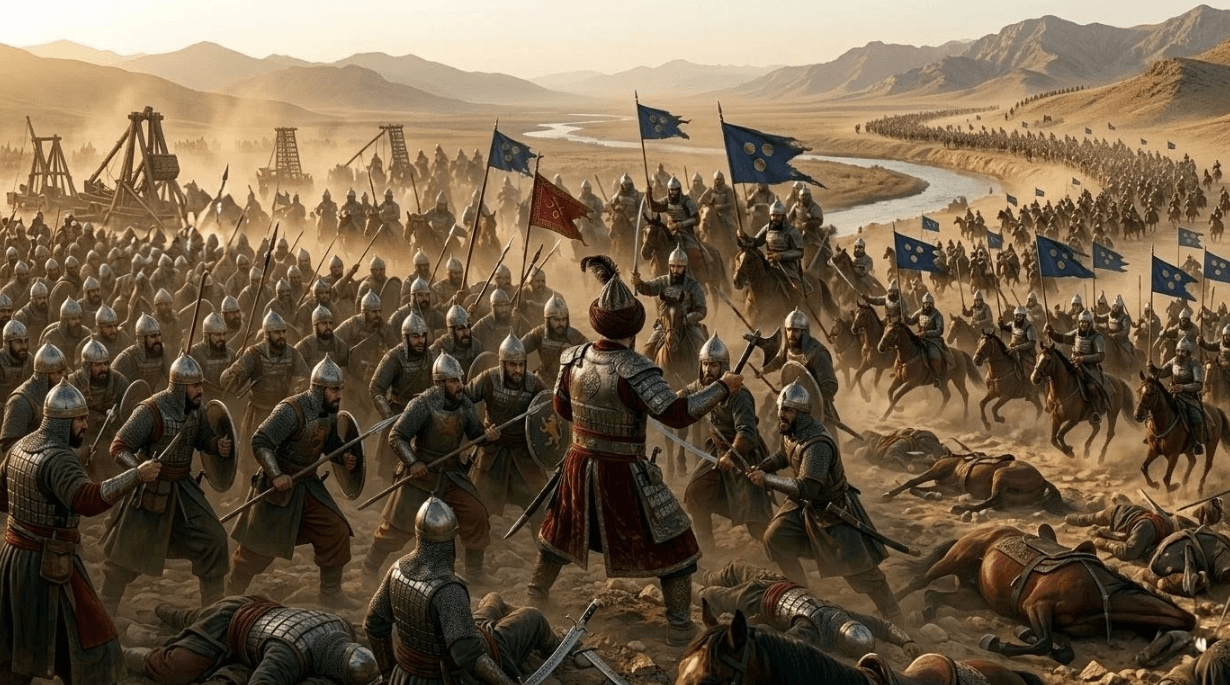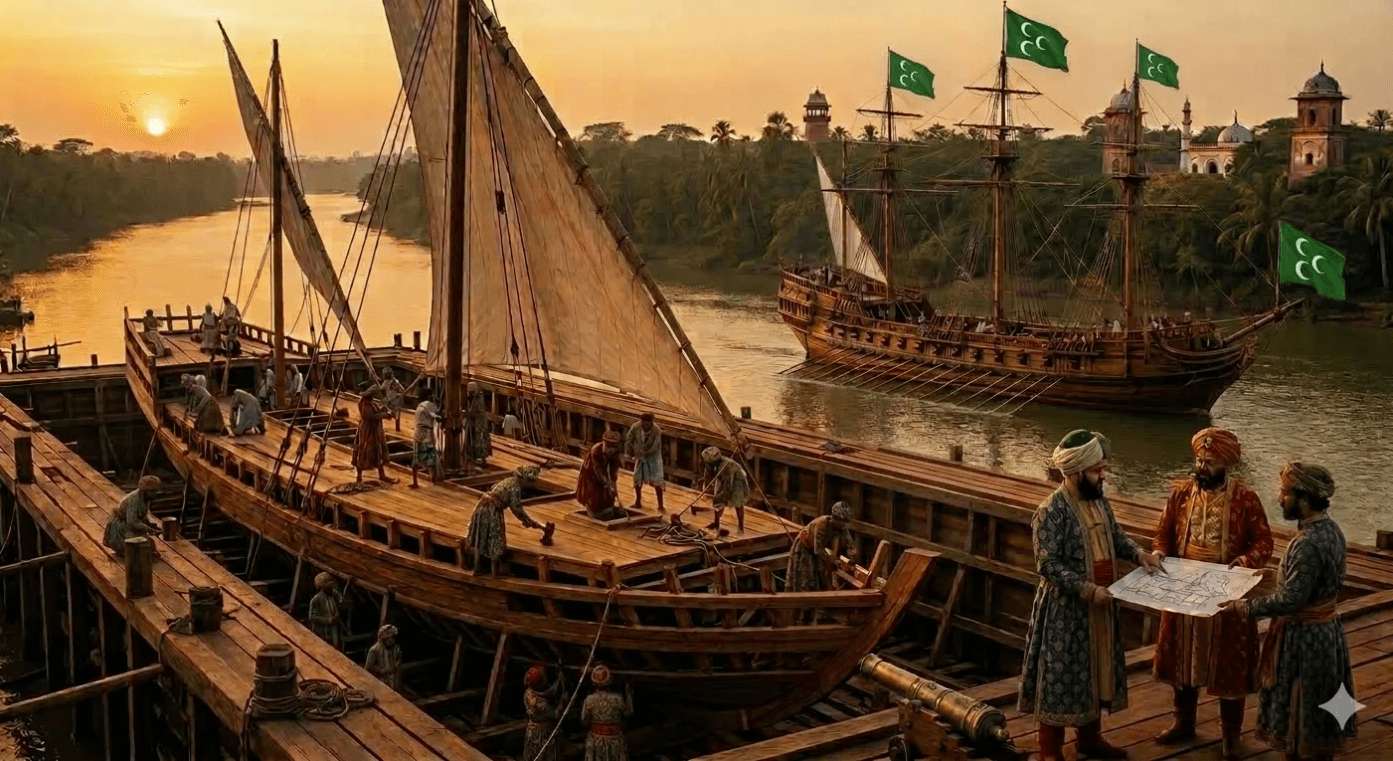
The official name of the Ottoman Empire was “Memalik-i mahrusa-i şahane” (the well-protected lands of His Imperial Majesty) – the Ottomans protected the lands and people within their territory and bore responsibility for them. Renegades from Christian countries, whom the Ottomans considered equal brothers in the Islamic sense, played a significant role in the rise and expansion of the Ottoman Empire. Just as Köse Mihal had served Osman Gazi, many sultans continued to utilize the skills and knowledge of Europeans who had been rejected, insulted, or persecuted at the princely courts of the West. They were particularly useful in building up artillery and the navy. The enormous cannon of Master Orban from Transylvania, for example, aided in the conquest of Constantinople.

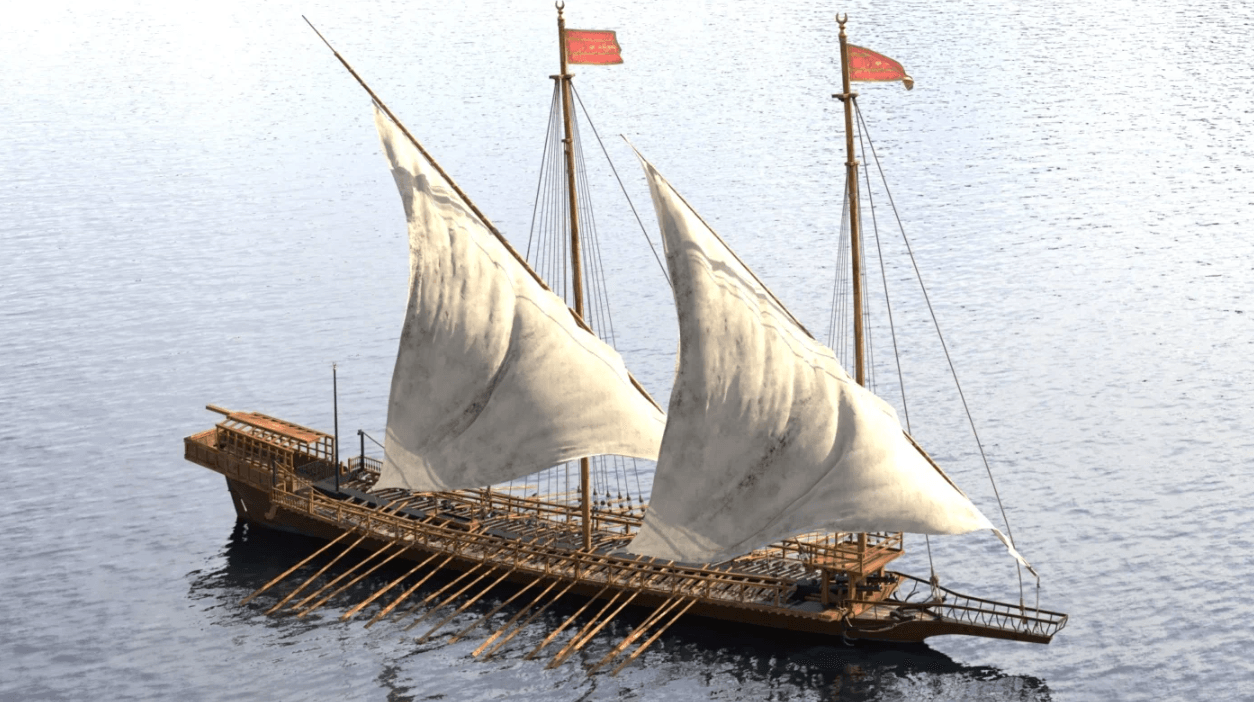
One of the most famous renegades, Uluç Ali Pasha (1519–1587), was born Giovanni Dionigi Galeni in Calabria (southern Italy). Captured by corsairs when he was about 17 and forced to serve as a galley slave, he converted to Islam within a few years and rose through the ranks in North Africa. He was promoted to the rank of Beylerbey (Chief Governor) of Alexandria and later to Pasha of Tripoli and Algier. He fought at the Battle of Lepanto (1571), where the Ottoman fleet suffered a major defeat. Uluç Ali distinguished himself by preserving part of his squadron and retreating in good order and captured the flagship of the Maltese Knights with its great banner. For this, he was promoted to Grand Admiral of the Ottoman fleet and received the honorary title of Kılıç (“Sword”) by Sultan Selim II.
He became Kapudan Pasha (grand admiral of the Ottoman Navy) in 1572and began to rebuild the Ottoman fleet. He later sponsored the construction of the Kılıç Ali Pasha Mosque in Istanbul—an enduring sign of how fully he integrated into Ottoman elite society. His career demonstrates how conversion could lead not just to survival but to extraordinary power.
Cigalazade Yusuf Sinan Pasha (1545–1605) was born Scipione Cicala into a prominent Genoese family. Together with his father he was captured by Ottoman forces during a naval battle in 1561. The father was ransomed from captivity. Like many young captives of noble birth, Scipione was inducted into the Ottoman corps of young boys to be trained for imperial service. He converted to Islam and rised in ranks in imperial service. He married two great-granddaughters of Suleiman I.
Cigalazade rose astonishingly high—becoming Kapudan Pasha and eventually Grand Vizier. His background made him especially valuable in diplomatic dealings with European states. He was one of the most capable statesmen of the Ottoman Classical Age, having contributed to the eastwards expansion of the empire at the expense of Persia and successfully defended Ottoman Hungary from Habsburg invasion. The Cağaloğlu quarter in Istanbul is named after him. A son of him married a daughter of of Sultan Mehmed III, another son a daughter of Sultan Murad III.
Claude Alexandre, Comte de Bonneval (1675–1747), was known in the Ottoman Empire as Humbaracı Ahmet Pasha. He came from an old family in the Limousin region. At the age of thirteen, he joined the Royal French Marine Corps and subsequently rose rapidly through the ranks of the French army, having demonstrated his courage and great military talent. His insolent attitude towards the Minister of War led to his court-martial in 1704. He was sentenced to death but escaped to Germany. Through the influence of Prince Eugene, he obtained a general’s command in the Imperial Habsburg army. He fought in the War of the Spanish Succession, then against France, and later in the Turkish War against the Ottomans, where he was wounded at the Battle of Petrovaradin. He had a greater fondness for wit and irony than was permissible in military service. He could have risen to the highest ranks, but he quarreled with Prince Eugene, about whose entourage he had written satirical poems that amused all of Vienna. The Prince sent him to the Netherlands with an artillery detachment, where Bonneval’s impetuous temper led to a dispute with the deputy governor, who had him arrested and court-martialed. He was sentenced to death, but the Emperor commuted the sentence to one year of imprisonment and exile. Bonneval was brought to Vienna, stripped of all his honors, and deported to Venice.
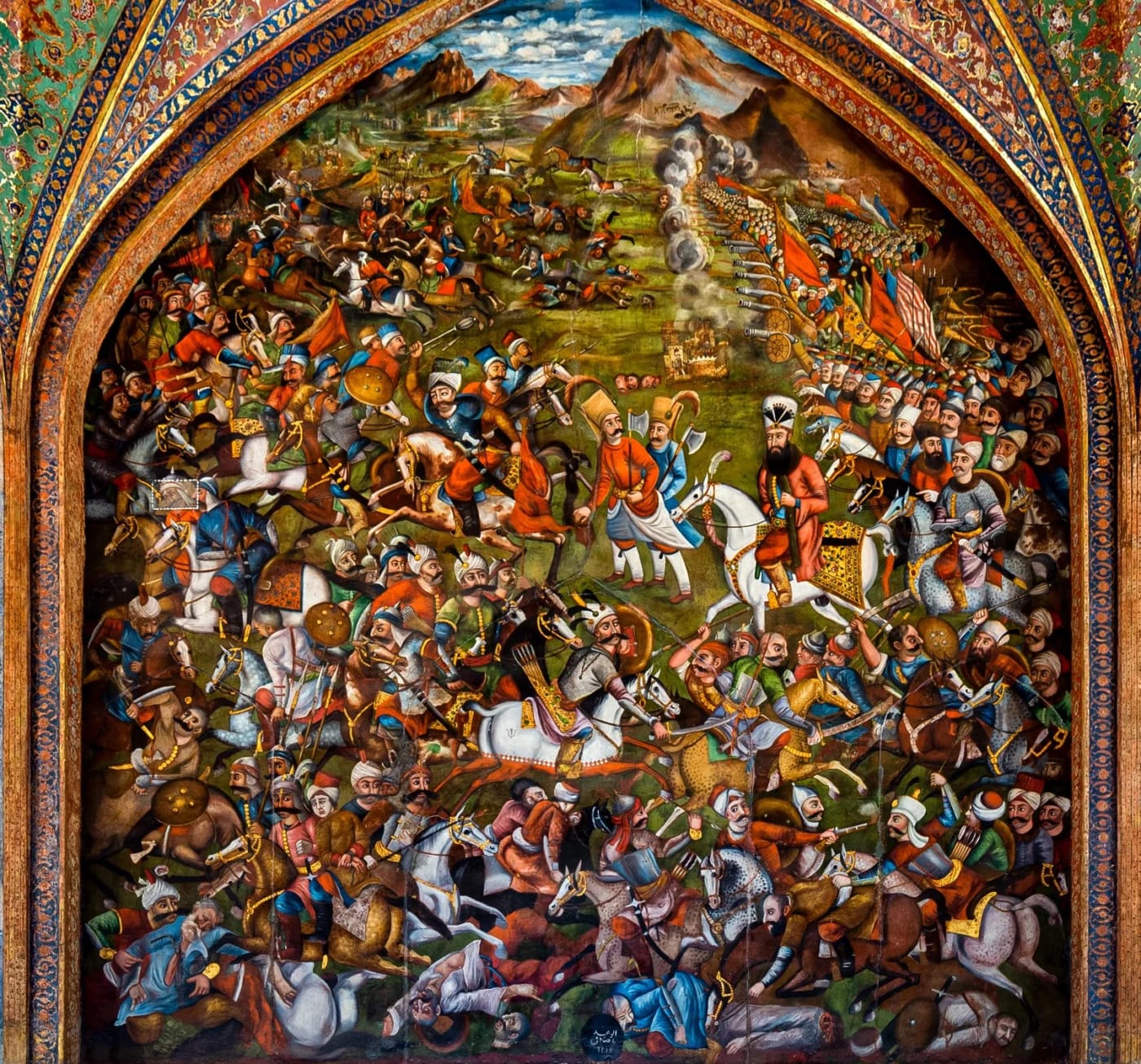
Soon after his release, Bonneval offered his services to the Ottoman Empire. He converted to Islam and took the name Ahmed. He was made a pasha and appointed to reorganize and command the outdated artillery of the Ottoman army. Bonneval was well-versed in the structure and weaknesses of the Habsburg troops and played a decisive role in the Austrian defeat at Niš during the Russo-Turkish War (1736–1739). The outcome of this war, in the Peace of Belgrade (1739), meant the loss of northern Serbia, including Belgrade, territories in northern Bosnia, and Little Wallachia for Austria, and severely damaged its prestige in the Holy Roman Empire and Prussia. Bonneval rendered valuable service to the Sultan in the war against Russia and against Nadir Shah. As a reward, he was appointed governor of Chios. However, he fell under the Sultan’s suspicion and was exiled for a time to the Black Sea coast. Bonneval died in Istanbul in 1747.
İbrahim Müteferrika (c. 1672–1745) was an Ottoman scholar and diplomat of Hungarian origin. It is likely that Müteferrika was a Unitarian in Transylvania who emigrated to Istanbul due to persecution. It seems certain that as a young man, Müteferrika was already fluent in several languages, including Latin, Greek, French, and German. In Istanbul, he converted to Islam, learned Ottoman Arabic, Arabic, and Persian, and researched his new faith. He then published his views in his work “Risale-i Islamiye” (Treatise on Islam, 1705–1711). His profound humanistic education and linguistic skills quickly brought him to prominence in Istanbul, and he was appointed courier and interpreter to the Sultan. The Grand Vizier Damat Ibrahim Pasha befriended him and entrusted him with delicate diplomatic missions. In the diplomatic service, he undertook numerous diplomatic missions and negotiated with Austria, France, Russia, and Sweden. Among other engagements, he served as ambassador to Vienna in 1715, where he met Prince Eugene. In 1717, he went to Paris to persuade the Transylvanian Prince Rákóczi Ferenc II, who was seeking exile there, to move to Istanbul. In Turkey, he assumed the role of Rákóczi’s Turkish secretary. For years, Ibrahim Müteferrika acted as an acquainted mediator between the Sublime Porte and the exiled ruler, and numerous confidential dialogues, both spoken and written, concerning domestic and foreign affairs passed through his hands. Müteferrika himself modestly described himself in his work Risale-i Islamiye: “I am an unassuming, penniless slave, and was born in Hungary, in the city of Kolozsvár.”
In 1726, he applied for permission to establish a printing press and in 1727 received authorization from Sultan Ahmed III to operate a printing press for the production of secular printed works. In 1729, he put the first Ottoman printing press in Arabic script into operation. Previously, only Hebrew and Armenian printing presses had existed in the Ottoman Empire. The first printed work was Vânkulı Lügatı, an Arabic-Turkish dictionary. The travelogue of the famous Evliya Çelebi was among the first works printed at the press. Müteferrika printed both his own works and translations of scientific and historical works from Latin. Another important printed work was the Cihân-nümâ, a world atlas by Kâtib Çelebi. He also printed a French-language grammar of the Turkish language in Latin script. By 1742, Müteferrika’s printing house had published a total of seventeen works with an average print run of 500 to 1000 copies.