From modest beginnings the Ottoman state evolved into one of the great maritime empires of the early modern world. Ottoman seafaring connected three continents, fostered commercial networks from the Atlantic to the Indian Ocean, and projected military might across the Mediterranean.
The Ottoman Empire started in northwestern Anatolia, initially focused on land campaigns against Byzantine territories. However, proximity to the Sea of Marmara and the Aegean quickly drew the Ottomans into maritime affairs. The capture of key coastal towns such as Gallipoli in the 14th century marked a turning point, giving the Ottomans a strategic naval base that allowed them to move troops between Anatolia and the Balkans.
By the time of Sultan Mehmed II the importance of naval power was unmistakable.
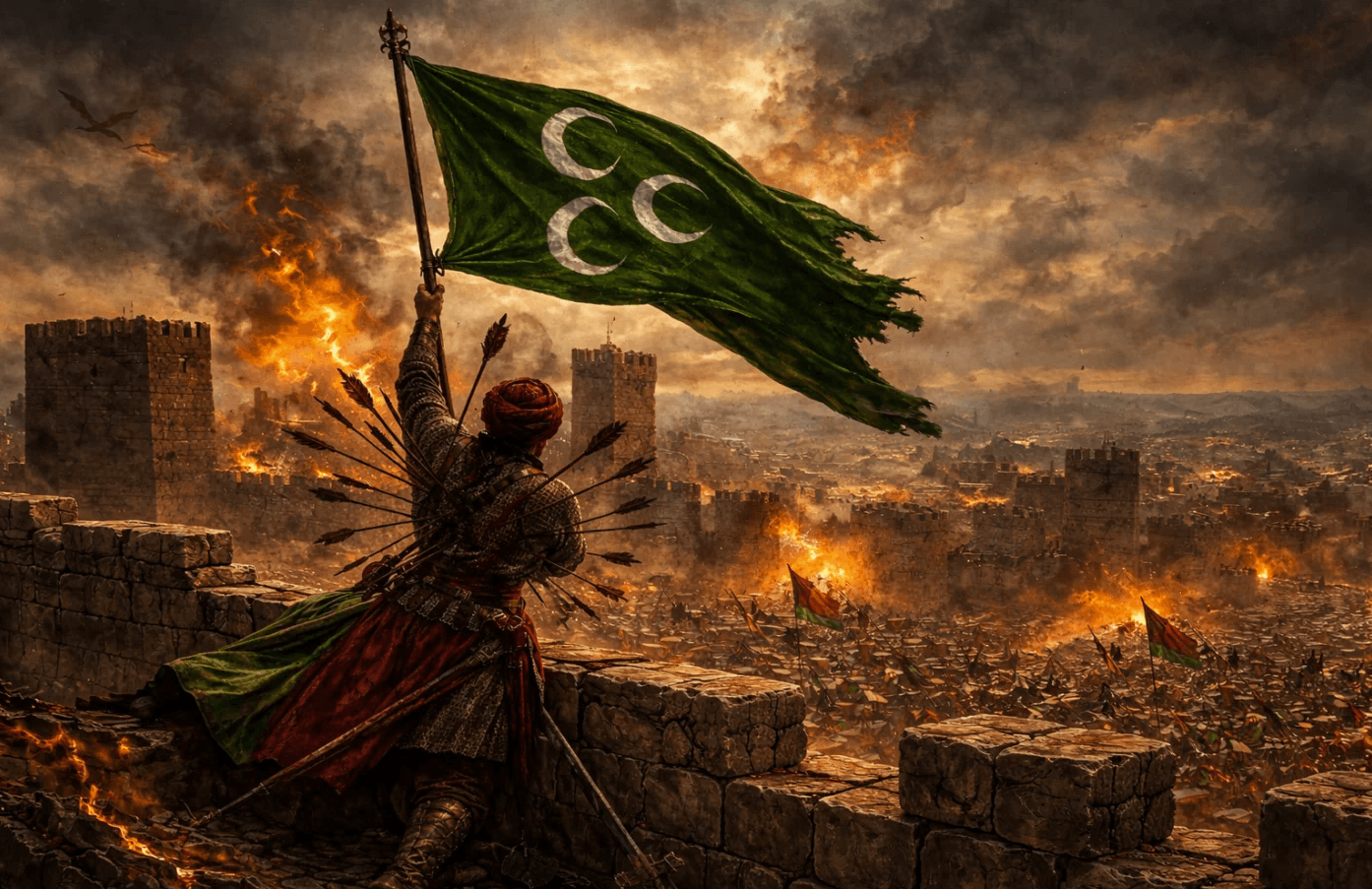
His 1453 conquest of Constantinople was not solely a land-based triumph; Ottoman ships were famously hauled overland into the Golden Horn to bypass Byzantine defenses. This bold maneuver symbolized a new maritime consciousness.
The city would become the beating heart of Ottoman naval administration.
The 16th century marked the golden age of Ottoman seafaring, the empire sought to dominate the eastern and central Mediterranean. Naval supremacy was essential not only for military security but also for controlling trade routes and coastal territories.
One of the most celebrated figures of this era was Hayreddin Barbarossa, a corsair-turned-admiral who played a decisive role in expanding Ottoman influence in North Africa. Barbarossa and his brother initially operated as privateers, challenging Spanish and Italian shipping. Eventually, Barbarossa entered Ottoman service and became Kapudan Pasha (Grand Admiral). His victory at the Battle of Preveza in 1538 secured Ottoman dominance in the eastern Mediterranean for decades.

The Ottoman fleet operated from major naval bases such as Istanbul and Alexandria, and it exerted influence over regions including the Aegean islands, the Levantine coast, and North Africa. Ottoman-controlled ports became hubs of trade and corsair activity, blending state-sponsored naval warfare with private enterprise.
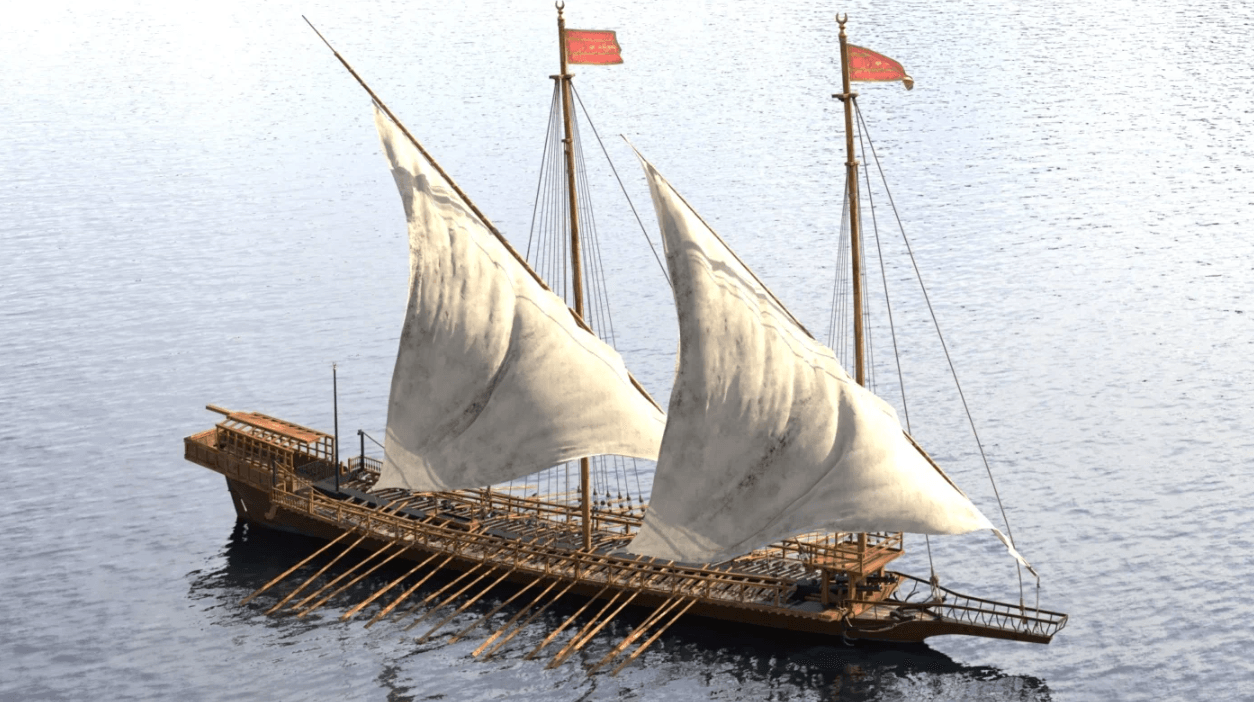
The Ottoman navy was a complex institution, combining centralized authority with regional initiative. At its peak, it fielded hundreds of galleys—long, narrow vessels powered by oars and sails. These ships were well-suited to Mediterranean conditions, enabling swift maneuvers in relatively calm waters.
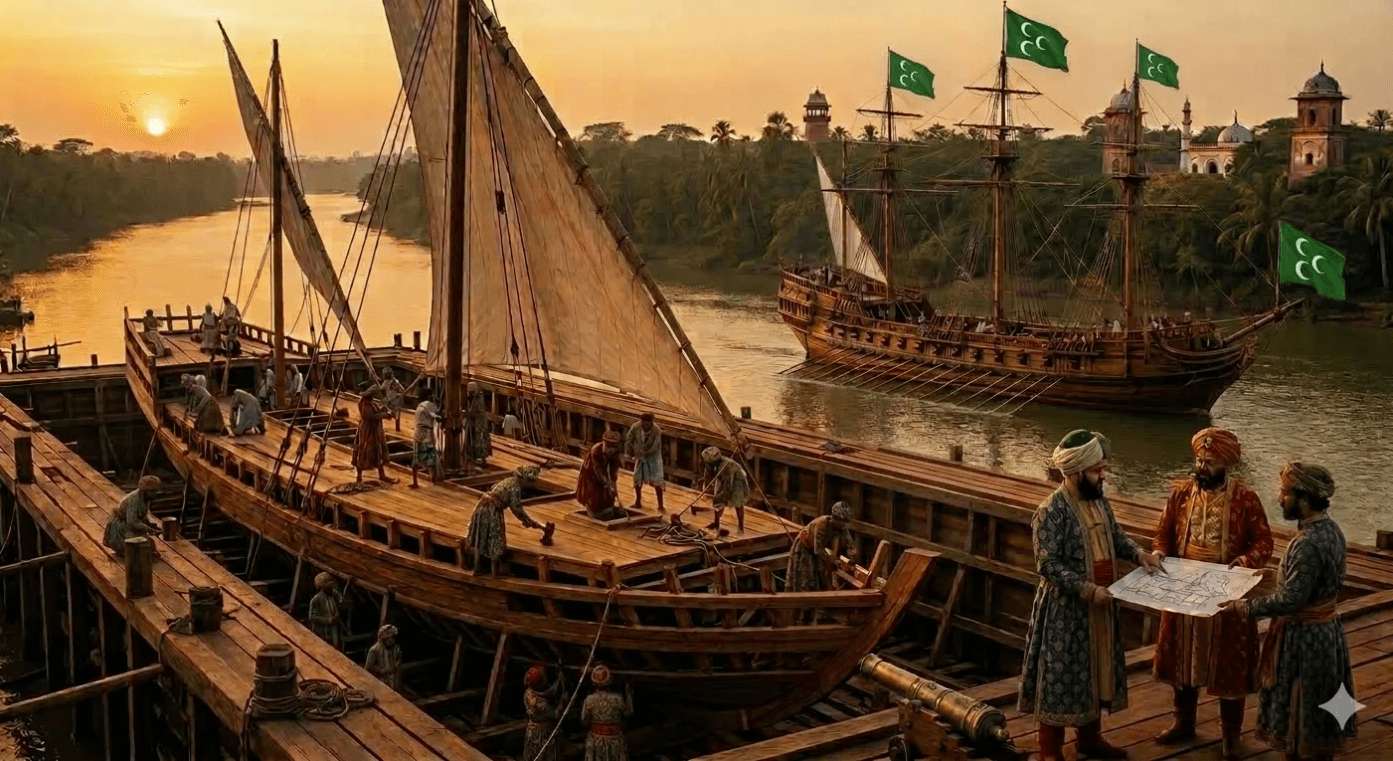
The Tersâne-i Âmire (Imperial Arsenal) in Istanbul was among the largest shipbuilding complexes of its time. Here, shipwrights constructed and repaired vessels, while administrators oversaw logistics and provisioning. The state maintained detailed records of ship numbers, crew assignments, and supplies.
Crew composition reflected the empire’s diversity. Sailors, soldiers, and oarsmen came from across the Ottoman domains, including Anatolia, the Balkans, and North Africa. Some were volunteers; others were conscripts or captives. The use of galley slaves—often prisoners of war—was common practice across Mediterranean navies, not unique to the Ottomans.
While the Mediterranean was the core arena of Ottoman naval activity, the empire also ventured into the Red Sea and the Indian Ocean. After conquering Egypt in 1517, the Ottomans gained access to the Red Sea, positioning themselves as defenders of Islamic holy cities and trade routes.
From ports such as Suez and Basra, Ottoman fleets confronted Portuguese expansion in the Indian Ocean. Commanders like Piri Reis—renowned for his detailed world map—attempted to challenge European control of key maritime chokepoints.
The control of pilgrimage routes to Mecca and Medina further underscored the strategic importance of maritime security. Ottoman ships protected convoys transporting pilgrims and goods to fulfill their role as protectors of the faithful.
Ottoman seafaring was more about commerce than about warfare. Merchants transported grain from Egypt, textiles from Anatolia, and spices from the East. Port cities became vibrant cosmopolitan centers where Muslims, Christians, and Jews interacted in markets and shipyards.
Corsairing played a dual role as both a military strategy and an economic enterprise. In North African ports such as Algiers and Tunis, Ottoman-backed corsairs captured enemy vessels and extracted ransoms. While often depicted as piracy, these activities were integrated into state policy, particularly during periods of conflict with European powers.
Ottoman seafaring unfolded in constant interaction with rival maritime powers. The Spanish Habsburgs, the Republic of Venice, and later emerging Atlantic powers all contested control of Mediterranean waters.
The Battle of Lepanto in 1571 stands as a dramatic episode in this struggle. Pope Pius V arranged the “Holy League” that included the major Catholic powers of southern Europe, specifically the Spanish Empire under Philip II (including Naples and Sicily), the Republics of Venice and Genoa, the Knights of Malta, Tuscany, Savoy, Urbino and Parma. The Leagues fleet (consisting of 212 warships) dealt a significant defeat to the Ottomans, destroying many of their ships. Although the Ottomans rebuilt their fleet with remarkable speed, Lepanto marked a psychological turning point, signaling that Ottoman naval supremacy was not unassailable.
In subsequent centuries, competition intensified. As naval technology evolved in the 17th century, sailing ships equipped with heavy artillery became more prominent. The Ottomans gradually adopted these innovations, though their reliance on galleys sometimes limited their effectiveness against Atlantic-style fleets. By the 18th and 19th centuries, the empire’s naval power had declined relative to Western European fleets, reflecting broader shifts in global maritime dominance.
Ottoman seafaring was mainly concentrated to the Mediterranean, the Black Sea (essentially an Ottoman lake for centuries), the Red Sea and parts of the Persian Gulf. To the west Ottoman-aligned North African corsairs (often called Barbary pirates) sailed out through the Strait of Gibraltar**** and raided Atlantic islands (Canaries, Madeira) and European coasts, even raiding Iceland (Westman Islands and Eastern fjords) in 1627 and Ireland (Baltimore in County Cork) in 1631, capturing a few hundred people there and took them back to North Africa (mainly Algiers) as slaves. These two raids were led by Murad Reis, a Dutch-born privateer who converted to Islam and became one of the most prominent Barbary corsair captains.
Towards the east the Ottomans fought the Portuguese in the Indian Ocean and supported Muslim states like the Sultanate of Aceh (in modern Indonesia). They sent cannons, firearms and gunpowder, military engineers and artillery specialists. These helped Aceh fight the Portuguese, especially in conflicts around the Strait of Malacca. Aceh actively sought recognition from the Ottoman Sultan, who was widely seen as a leading Muslim ruler (Caliph).
But the Ottomans did not explore China, Japan, or the Pacific in the same way Europeans later did, as they already controlled key Silk Road and spice routes.
Ottoman seafaring left an imprint not only on geopolitics but also on culture and science. Maritime knowledge flourished, particularly in cartography and navigation. The works of Piri Reis combined Islamic, Mediterranean, and European geographic traditions, reflecting a synthesis of knowledge.
Naval architecture and port infrastructure also shaped urban landscapes. Istanbul’s shoreline was dotted with shipyards, warehouses, and fortifications. Maritime themes appeared in literature and art, celebrating both conquest and the romance of the sea.
Moreover, the Ottoman navy symbolized imperial identity. Ceremonial departures of fleets were grand spectacles, reinforcing the sultan’s authority and the empire’s reach.
By the 19th century, the nature of naval warfare had changed dramatically. Steam power, ironclads, and advanced artillery redefined maritime competition. The Ottomans attempted modernization, purchasing and constructing steamships, but financial constraints and political turmoil hampered sustained reform.