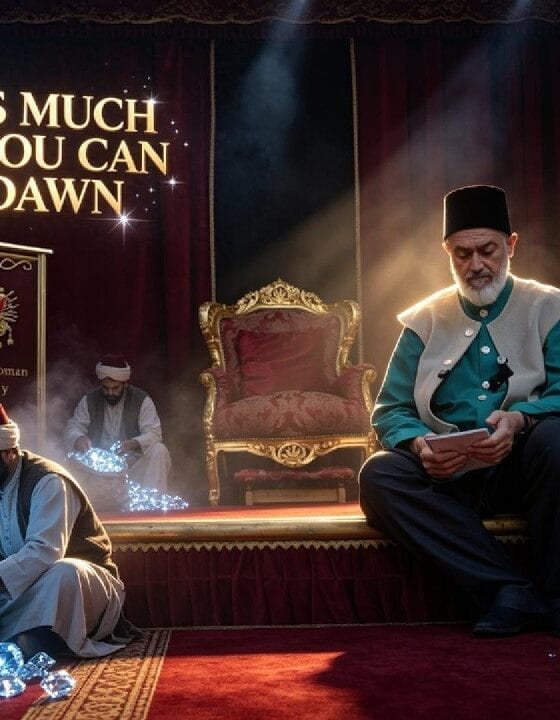
In this teaching we revisit a vivid narrative that has been handed down through generations of seekers. It tells of Ayaz, the remarkable sixteen‑year‑old vizier who served Sultan Mahmud of Ghazni—often celebrated in the verses of Mevlâna Celâleddîn Rûmî for his extraordinary perception.
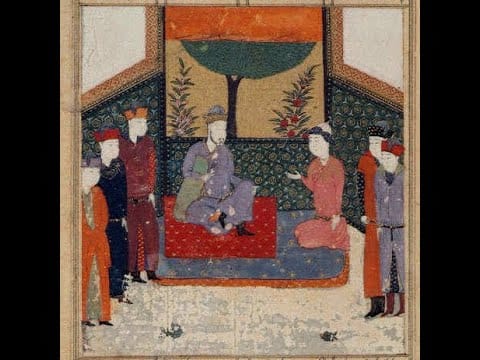
Sultan Mahmud, renowned for his conquests that stretched from India to Persia, surrounded himself with thirty seasoned ministers whose beards and experience marked them as veterans of war and statecraft. Yet among these elders stood Ayaz, a boy still without a full moustache. The court was perplexed when the Sultan allotted the entire collective stipend of those senior viziers to this young man. Their murmurs echoed a simple question: how could a youth receive what thirty seasoned advisers earned together?
The answer emerged during an unexpected episode. While the Sultan was on a hunt, a distant movement caught his eye—a caravan moving across the horizon. He asked his ministers to discover its origin and destination. One vizier reported that it came from Iran and headed toward Şam (Damascus). Another identified it merely as a trade caravan. A third added details about its size—375 people comprising women, men, children, the sick, artisans, soldiers, foot travelers, and riders—but still could not explain its full route or purpose.
Seeing their fragmented reports, the Sultan turned to Ayaz. The young vizier approached the procession himself, observed closely, and returned with a comprehensive description: it was a çanak‑kömlek (pottery) caravan traveling from Iran to Şam, then onward through Hicaz, India, and back again, gathering silk threads and other wares along the way. He recounted precisely how many were women, men, children, artisans, and soldiers, and he traced each leg of its journey.
When Ayaz presented this complete picture, the Sultan smiled and explained that true insight does not depend on age or rank but on attentive presence. The young vizier’s ability to perceive the whole caravan while his senior counselors saw only fragments illustrated a deeper Sufi teaching: the heart that remains uncluttered becomes a mirror for divine knowledge.
We at the Royal Ottoman Society view Ayaz’s story as an invitation to cultivate childlike curiosity, humility, and sincere service in our own paths. May we, like Ayaz, learn to look beyond surface details and discern the hidden order within every circumstance.
If this tale resonates with you, consider joining our community of seekers where such treasures are explored together: Community.