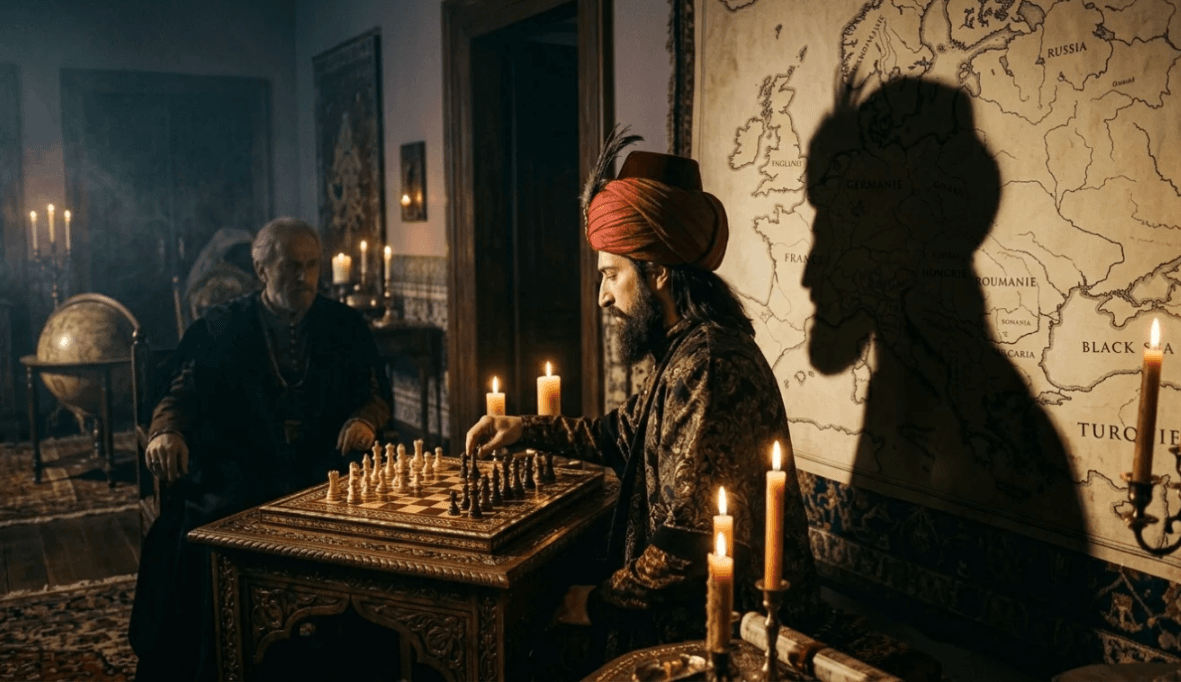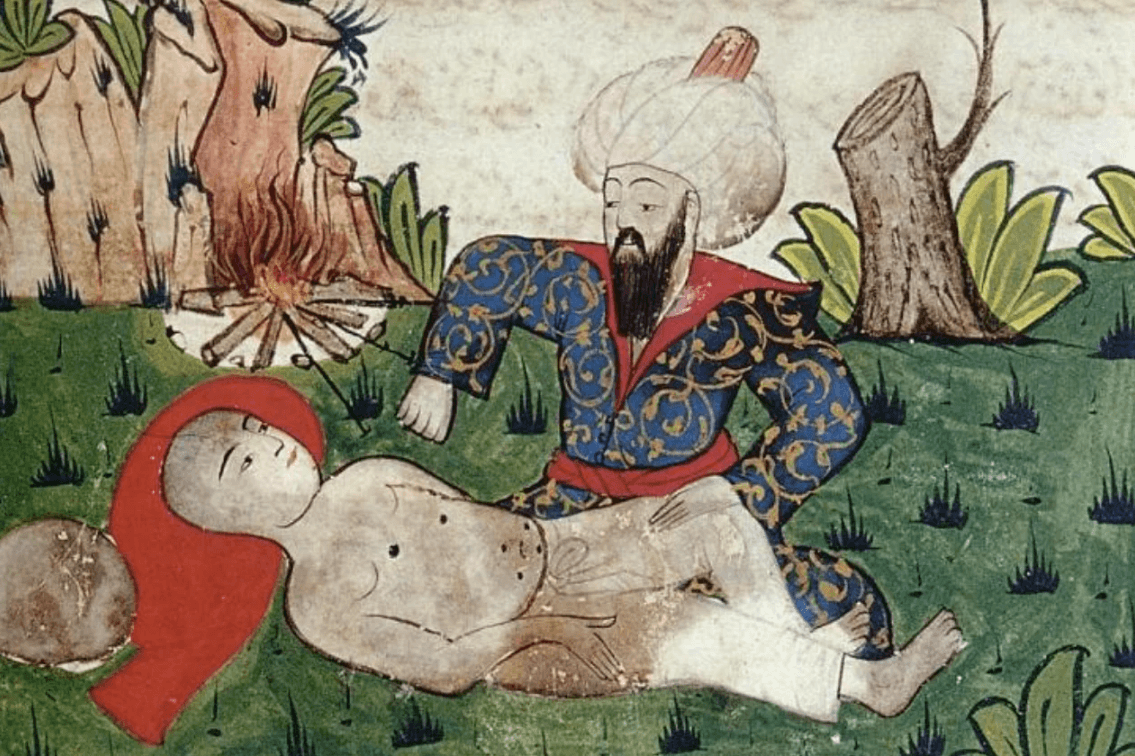
With the rise of Turkish historical television series, more people know about the individual lives of Ottoman Sultans, and one of the most popular ones is Abdulhamid II, who we see in the show often spending his time in his carpentry workshop.

Many Ottoman sultans were trained in a practical craft as part of palace education. This wasn’t symbolic; it reflected the Turko-Islamic tradition. The combination of steppe warrior culture and Islamic respect for craftsmanship made this tradition more natural in the Ottoman context. Manual labor was always honorable in Islam. The prophets were described as craftsmen. Turkic rulers valued practical skill and self-discipline. To practice a manual craft cultivated patience, humility, and focus. And it also showed political symbolism: The sultan as both ruler and master artisan.
The sultans, who had received private lessons from a master during their youth, created works in many areas of art and crafts in the following years. They sold their valuable works to the pashas and princes in their vicinity and distributed the money as alms to the needy.
Most crafts were practiced inside the palace workshops. The Ehl-i Hiref (“Community of the Talented/Artisans”) were the imperial craftsmen employed directly by the Ottoman court. They functioned as a highly organized, salaried artistic corps serving the sultan and palace.
They were not ordinary guild members – they were state employees attached to the palace, especially in Topkapı Palace. The workshops were part of the imperial household and overseen by palace officials.
Artisans were on payroll, organized into specialized units. Each unit had a chief master. Surviving payroll registers from the 16th century show hundreds of craftsmen working simultaneously.

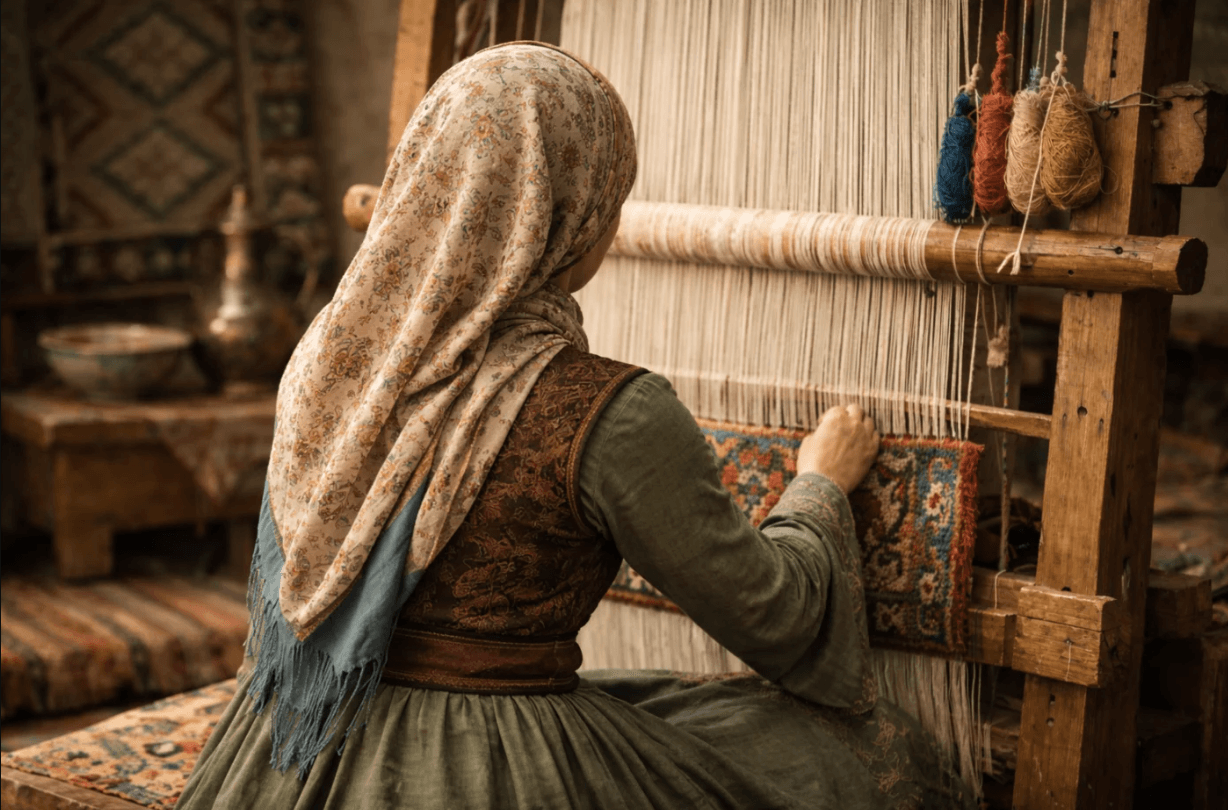
The Ehl-i Hiref was extremely diverse. Members included calligraphers, miniature painters (nakkaş), illuminators, goldsmiths, armorers, swordsmiths, tile makers, embroiderers, bookbinders, architects, jewelers and textile designers.
Early Ottoman rulers such as Osman I and Orhan were frontier warrior-leaders. In that era manual skills like archery, weapon maintenance and horsemanship were normal. Practical ability was military rather than artistic.
In the 15th and 16th century several sultans are documented as practicing calligraphy (very common), goldsmithing and metalwork.
Sultan Mehmed II (r. 1444–1446, 1451–1481) was known as a highly educated ruler fluent in several languages. He practiced calligraphy and is said to have worked in palace workshops. He forged metal objects and blades, was a great engineer and a patron of artisans and organizer of palace craft guilds.
Sultan Bayezid II (r. 1481–1512) was a trained calligrapher in the Islamic artistic tradition. He produced works in Arabic script and supported leading calligraphers of his time. Manuscripts and inscriptions are attributed to him in palace collections. His interest strengthened calligraphy as a prestigious Ottoman court art.
Sultan Selim I (r. 1512–1520) practiced fine metalwork and jewelry crafting. He maintained close ties to palace artisans.
Sultan Suleiman the Magnificent (r. 1520–1566) personally worked as a goldsmith and crafted jewelry. This fits with his broader artistic persona — he was also a poet under the pen name Muhibbi – thousands of verses survived. His era elevated Ottoman decorative arts to their classical peak.
Sultan Ahmed I (r. 1603–1617) practiced Islamic calligraphy and supported religious arts. Some inscriptions attributed to him survive.
From the 17th century, many princes were raised in relative confinement (the kafes system). The Kafes system (Turkish for “cage”) was a form of house arrest for male heirs to the throne (Şehzade) practiced in the Ottoman Empire from 1617 onwards. Princes lived in isolation in the harem to prevent succession struggles and fratricide. This system changed education significantly. Some sultans had limited administrative training. Focus was more on religious study or leisure pursuits. There is no strong evidence of practicing crafts.
The tradition of craftmanship partially revived in the 18th century in a more personal, hobby-like form.
Sultan Mahmud II (r. 1808–1839) was a skilled calligrapher whose signed works still survive. His calligraphic panels (levha) can still be seen in Istanbul collections. He also practiced woodworking.
Sultan Abdul Hamid II (r. 1876–1909): His carpentry / woodworking is very well documented. He personally built high-quality furniture in the palace workshop. Some pieces attributed to him are preserved in Istanbul palaces (e.g., Yıldız Palace collections). He used woodworking as relaxation and personal retreat from politics.
One of his best pieces, a study desk with hidden drawers and a great craftsmanship table, is exhibited in Beylerbeyi Palace and is still amazing today, even by the by the best craftsmen for the design and techniques.
This complex and artistic design with hidden compartments is seen as a reflection of the last Ottoman Sultan.
He was a colourful person and intellectual with different interests like reading, photography, painting, craftmanship, and sports.
Tamirhane-i Hümayun – literally meaning “the Imperial Repair Shop” or “the Sultan’s Workshop” – was founded by imperial decree to teach Ottoman princes the art of carpentry and to supply the wooden furnishings of Yıldız Palace. More than a simple workshop, it functioned as a refined academy for master craftsmen. Its head instructor was the 34th and last reigning Ottoman Sultan, Abdulhamid II, who took a personal and active role in its work.
Constructed as a single-story building using the traditional Baghdadi technique, the workshop stood alongside the inner gardens of Yıldız Palace. Around sixty craftsmen worked there, many of them foreigners residing in the Ottoman Empire or arriving from various European countries. The main division, known as the “Great Carpenter’s Shop,” was directed by Mehmet Efendi.
The Sultan often presented finely crafted wooden pieces he admired as gifts to distinguished guests. In 1888, determined to keep the workshop at the forefront of technology, he ordered a 35-horsepower steam engine and a steam-powered planer from Europe. Alongside the main facility, he maintained a private studio equipped for wood carving, mother-of-pearl inlay, and other decorative techniques—some inspired by Japanese craftsmanship.
Today, furniture and tools from the Tamirhane-i Hümayun can still be seen in Yıldız Palace, Beylerbeyi Palace, Dolmabahçe Palace, and other late Ottoman palaces.
Many pieces produced at the workshop bear the Sultan’s tuğra—the imperial calligraphic monogram—though this does not necessarily mean they were crafted entirely by his own hands. While memoirs of pashas and his daughters confirm that he personally completed certain works, he is known to have designed most of the pieces himself. Some of these designs were particularly ingenious, featuring hidden compartments and intricate mechanisms personally conceived—and at times executed—by the Sultan.