Written by Hannah Babar Mubarak
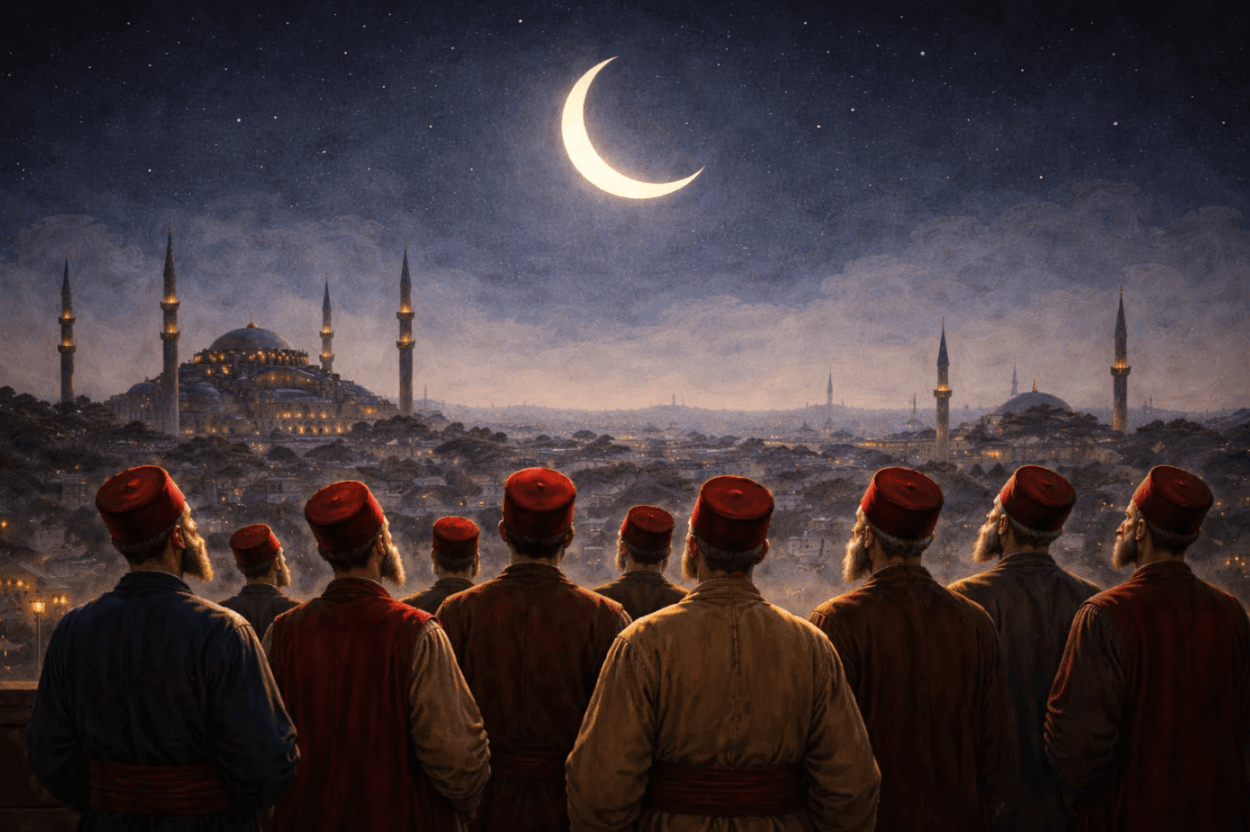
In the final days of Ramadan, the Ottoman capital took on a different rhythm. Islambul, already a city defined by its mosques and religious institutions, became especially attentive to the last ten nights of the month. Among these nights was Laylatul Qadr, the Night of Power, described in the Qur’an as a night better than a thousand months. Ottoman Muslims approached it with deep reverence. It was not treated as a public celebration but as a moment of spiritual intensity when individuals and communities turned toward worship, prayer, and charity.
The atmosphere of the mosques, the devotion of worshippers, and the charitable life of the city together reveal the quiet beauty that surrounded this sacred night.

The Great Mosques of Islambul
The centre of Laylatul Qadr in the Ottoman world was the mosque. The imperial city contained some of the most impressive mosques in the Muslim world, built by sultans as both places of worship and symbols of imperial patronage. On the nights believed to hold Laylatul Qadr, these mosques filled with worshippers who gathered long before midnight.
Mosques such as the Süleymaniye Mosque, the Sultan Ahmed Mosque, and the Eyüp Sultan Mosque became focal points for prayer. Their large courtyards and vast prayer halls allowed thousands to gather at once. People arrived quietly, carrying small copies of the Qur’an or prayer beads. Some sat in contemplation while others joined the congregational prayers that continued deep into the night.
Inside these buildings the interior was illuminated by hundreds of oil lamps. Suspended in circular arrangements beneath the domes, the lamps produced a warm golden light that filled the prayer halls. Their reflections shimmered against marble floors and decorated walls covered with Qur’anic calligraphy. The lighting was soft rather than bright, creating an environment suited for reflection and devotion.
Mahya Lights Across the Sky
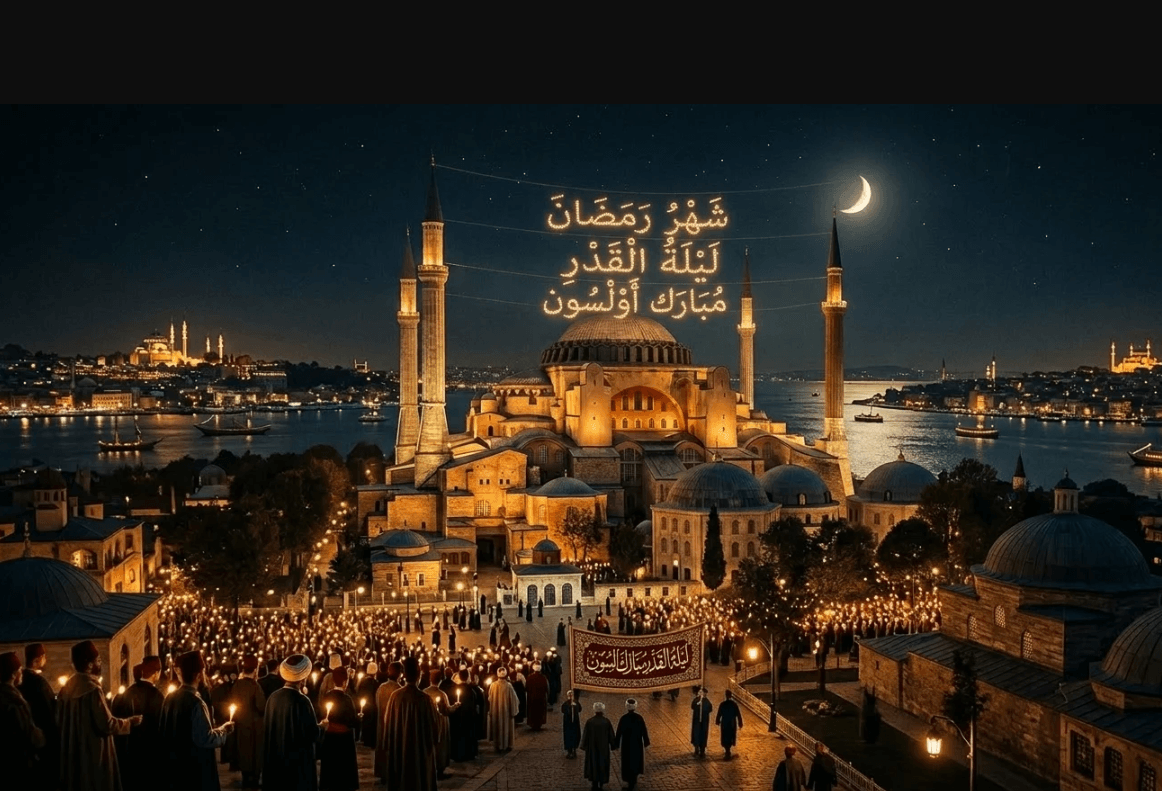
While the interiors of the mosques glowed with oil lamps, another distinctive feature appeared above the city. Between the tall minarets of major mosques, Ottoman craftsmen arranged rows of small lamps suspended on ropes. These illuminated displays were known as mahya.
The lamps were carefully positioned to form words and phrases visible across the sky. During Ramadan they often carried expressions praising Allah or welcoming the holy month. At night the words appeared to float between the minarets, creating a remarkable sight visible from distant parts of the city.
Creating these displays required both skill and patience. Workers known as mahya masters climbed the narrow staircases of the minarets and adjusted each lamp by hand. Every evening the lamps were lit one by one, transforming the dark skyline into a canvas of light.
Although visually striking, the mahya displays were not intended as decoration alone. They served as reminders of the spiritual significance of Ramadan and contributed to the atmosphere of the sacred nights.
Recitation and Worship Through the Night
The true focus of Laylatul Qadr was the worship taking place within the mosques. Ottoman religious life placed strong emphasis on Qur’an recitation and scholarship. During the final nights of Ramadan many mosques hosted extended recitations that continued for hours.
One important moment during these nights was the completion of the full recitation of the Qur’an, known as khatm al Qur’an. When the final verses were read, worshippers raised their hands in supplication. The gathering would often conclude with prayers asking for forgiveness, guidance, and divine mercy.
The mood during these moments was quiet and focused. Rather than public ceremony, the night was defined by humility. Individuals stood in prayer, whispered supplications, or listened attentively to the recitation echoing beneath the large domes of the mosques.
For many worshippers the hope was simple yet profound. They wished that the night they were witnessing might be Laylatul Qadr itself.
Charity and the Ottoman Imarets
The spiritual atmosphere of the night was also reflected in acts of charity. Ottoman society maintained an extensive network of charitable institutions funded through religious endowments. Among the most important were the imarets, public kitchens that provided food for the poor, travellers, and students.
During Ramadan these kitchens became especially active. Large quantities of soup and bread were prepared daily and distributed to those in need. On the nights associated with Laylatul Qadr donations often increased, as many believed that charity given during this time carried greater reward.
These acts of generosity were usually performed quietly. Wealthy families and officials often gave anonymously through charitable endowments or direct donations. In this way Laylatul Qadr was not only a night of prayer but also a night when social responsibility and compassion were expressed across the city.
The Final Hours Before Dawn
As the night continued, Islambul remained awake. In homes and mosques worshippers continued their prayers while others prepared for the final meal before dawn.
In the early hours before sunrise another familiar sound moved through the streets. Ramadan drummers walked through neighbourhoods beating their drums in steady rhythms. Their task was to wake residents for suhoor, the meal eaten before the daily fast resumed.
Carrying lanterns, they moved from street to street calling people to wake before the approaching dawn. This tradition had long existed in Ottoman towns and played an important role in organizing daily life during Ramadan.
Soon after, the first light of morning appeared over the city. Worshippers completed the dawn prayer and quietly left the mosques. The lamps were extinguished and the city prepared for another day of fasting.
A Night of Quiet Beauty
Laylatul Qadr in the Ottoman world was marked by stillness rather than spectacle. Its beauty emerged from the combination of devotion, community, and charity that filled the city during the final nights of Ramadan.
The glow of oil lamps within the great mosques, the illuminated words suspended between minarets, the sound of Qur’an recitation echoing through vast prayer halls, and the generosity extended through charitable kitchens all formed part of the experience.
For the people of the Ottoman Empire, Laylatul Qadr represented a moment when the entire city turned toward reflection and worship. In those quiet hours between sunset and dawn, the imperial capital paused to remember the night when revelation first descended and to seek the mercy promised within it.