By Peerzada Bilal Ahmet Makhdoomi, member of the Royal Ottoman Society
Why We Need the Ottoman Spirit Back
By Peerzada Bilal Ahmet Makhdoomi
Representative for India, Royal Ottoman Society
For six hundred years the House of Osman stood as the shield of the Ummah. It was not merely a state. It was a living civilisation that carried the trust of the Prophet ﷺ, protected the Two Holy Sanctuaries, upheld the sacred law, and gave space for the saints and scholars to flourish. When that order ended in 1924, something far greater than a political system was lost. A spiritual and civilisational balance was broken. Today the world feels that absence.
### What the Ottomans Actually Built
The Ottomans did not conquer for the sake of land alone. They built institutions that lasted centuries:
– They secured the Hajj routes and the holy cities of Mecca and Medina for hundreds of years, ensuring the safety of pilgrims from every corner of the Muslim world.
– They maintained the Caliphate after the fall of the Abbasids, giving the Ummah a visible centre of unity.
– They developed a sophisticated system of justice, education, and endowment (waqf) that supported hospitals, schools, soup kitchens, and mosques across three continents.
– Under their protection, the sciences of the soul flourished. The great Sufi orders found space to teach, and the works of the saints were studied and transmitted.
This was not perfection. No human system is. But it was a serious attempt to order society according to the principles of justice, adab, and service to Allah.
The Prophetic and Spiritual Dimension
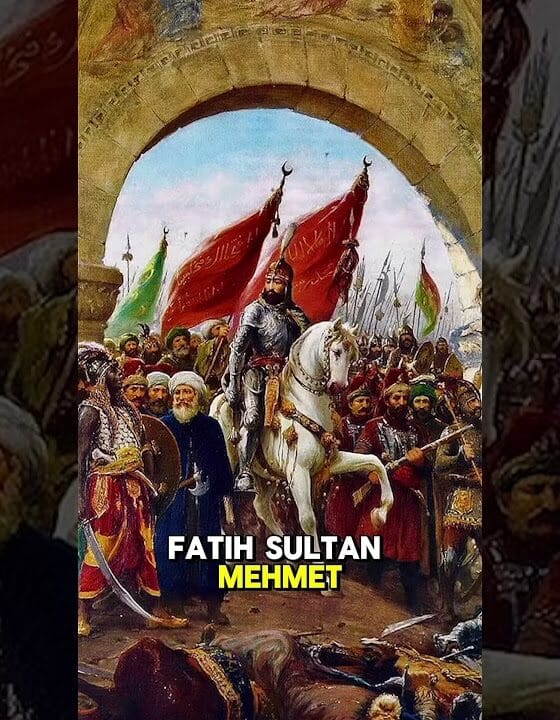
The conquest of Constantinople in 1453 was seen by many as the fulfilment of the well-known hadith of the Messenger of Allah ﷺ concerning the city. That victory gave the Ottomans a unique place in the sacred history of the Ummah.
In later centuries, a text known as *al-Shajara al-Nu‘māniyya fī al-Dawla al-‘Uthmāniyya* (The Tree of Nu‘mān Concerning the Ottoman State) circulated widely in Ottoman lands. It was attributed to Shaykh al-Akbar Muhyiddin Ibn al-‘Arabi. Whether every word of that short work can be traced to the historical Shaykh is a matter of scholarly discussion. What is beyond dispute is that generations of Ottoman scholars, sultans, and Sufis accepted it as a spiritual indication of the special role of the House of Osman. The text speaks of the dynasty’s rise, its protection of the sacred lands, and its place near the end of time.
Selim I’s discovery and honouring of Ibn al-‘Arabi’s tomb in Damascus after the conquest of Syria further deepened this connection. From that time onward, the Shaykh al-Akbar became a spiritual patron of the Ottoman path in the eyes of many.
Why the Need Remains
We do not call for the return of an empire of the past as a political project of force. We call for the return of the spirit that made that empire possible: the spirit of unity under the sacred law, the spirit of service to the weak, the spirit of knowledge joined with spiritual realisation, and the spirit of dignity that refuses to bow before anything except Allah.
Today the Ummah is fragmented. Sacred places remain under threat or neglect. Knowledge is often separated from adab. The young search for identity in every direction except the one that once gave the Muslim world its strength and beauty.
The Ottoman path, as preserved and taught by our Shaykhs in the Naqshbandi-Haqqani line, offers a living reminder of what is possible when a people place the pleasure of Allah above all else. It is not about flags or borders. It is about restoring the heart of a civilisation that once knew how to carry the trust.
May Allah restore to this Ummah the balance, justice, and spiritual light that the Ottomans, at their best, tried to uphold. And may He make us among those who work sincerely for that return not through empty slogans, but through sincere purification of the self, service to others, and firm attachment to the path of the Prophet ﷺ and the saints.
Allahumma salli ‘ala Sayyidina Muhammad wa ‘ala alihi wa sahbihi wa sallim.