
From the Ottoman Empire’s rise in the fourteenth century to the upheavals of the First World War, Christians lived as protected subjects within a Muslim-ruled imperial system. As the Ottoman Empire increasingly expanded, it incorporated vast Christian populations: Greeks, Bulgarians, Serbs, Albanians, Armenians, and others.
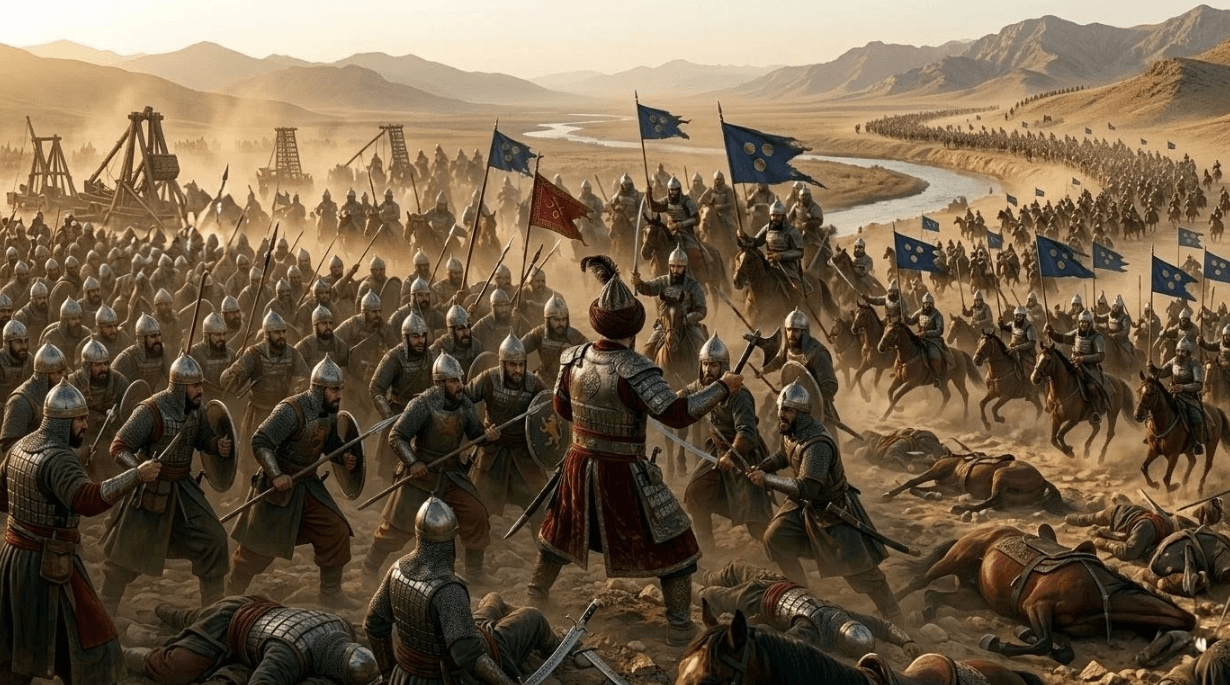
A defining moment came in 1453 with the conquest of Constantinople by Fâtih Sultan Mehmed. The capital of the Byzantine Empire was the heart of Eastern Orthodox Christianity. When Byzantine Emperor Constantine XI realized the young sultan’s intentions to conquer the city he turned to Western Europe for help. But the price he had to pay was to give authority over the eastern church to the Pope in Rome. The imperial court declared this union valid end of 1452 which was met with strong resistance in Constantinople. The population, as well as the leadership of the Byzantine Church, became bitterly divided.
Sultan Mehmed wished to assure the loyalty of the Greek population after the conquest. Rather than eliminating the Orthodox Church, he reestablished the office of the Ecumenical Patriarch and appointed Gennadios Scholarios, a bitter opponent of the union with the Pope, as the Patriarch of the Orthodox Church of Constantinople. In a gesture reminiscent of the practices of Byzantine emperors, the sultan himself invested him with the signs of his office – the crosier (dikanikion) and mantle. This ceremonial investiture marked a seamless continuation of the ceremonial traditions of the Byzantine Empire and would be repeated by all sultans and patriarchs thereafter.
Sultan Mehmed conferred upon the new Patriarch the title of millet Başkanı’ (Head of the Nation), thereby authorizing him to oversee all matters concerning orthodox Christians. The Ottomans divided their Empire into millets or subject nations, of which the Greeks were the largest, known as the Rum Millet. Gennadius II became a political authority as well as a religious one, as were all his successors under the Ottomans.
The Ottoman approach to Christians was rooted in Islamic law. Christians (along with Jews) were considered “People of the Book” (ahl al-kitab) and classified as dhimmis—protected non-Muslim subjects. As dhimmis, Christians were granted the right to practice their religion, the right to maintain their churches, internal autonomy in matters of personal status (marriage, divorce, inheritance) and communal leadership structures. In exchange, they accepted political subordination and paid a special poll tax known as the jizya (as Muslims paid zakat).
In comparison to much of late medieval Europe—where religious uniformity was often enforced and heresy punished harshly—the Ottoman model offered institutional continuity and communal survival for all Christians. Some Christian groups had to flee their homelands in Europe but were free to practice their religion in the Ottoman Empire.
Over time, the Ottomans developed what later historians call the “millet system.” The term millet means “religious community” or “nation”. The system was not fully formalized at once; rather, it evolved gradually.
The largest Christian community in the empire was the Greek Orthodox. As mentioned, the Patriarch of Constantinople became both spiritual leader and civil representative of the Orthodox millet. He and the Holy Synod were responsible for collecting certain taxes, overseeing ecclesiastical courts, representing Orthodox interests before the Ottoman state and maintaining schools and religious institutions.
The Patriarchate thus functioned as an intermediary between the state and millions of Orthodox Christians across the Balkans and Anatolia. This structure strengthened ecclesiastical authority and preserved Orthodox religious life.
Armenians, many of whom belonged to the Armenian Apostolic Church, formed another significant Christian community. In 1461, Sultan Mehmed recognized the Armenian Patriarch of Constantinople as head of the Armenian millet. Like the Orthodox, Armenians administered their internal affairs through ecclesiastical institutions.
Armenians became especially prominent in commerce, finance, crafts, and certain administrative roles. By the seventeenth and eighteenth centuries, Armenian merchants were active across the Mediterranean, Persia, and beyond.
Other Christian groups—such as the Syriac Orthodox, Chaldeans, Maronites (especially in Lebanon), Coptic Christians, and later Melkite Greek Catholics and other Catholic and Protestant communities—were gradually incorporated into the imperial framework.
The millet system reinforced religious identity as the primary axis of communal organization. Christians were not recognized as ethnic or national groups but as religious communities. This would have profound implications in the nineteenth century when nationalism emerged.
Conversions to Islam occurred for various reasons—economic opportunity, social mobility, tax relief, or genuine religious conviction. Over centuries, large portions of the Balkans and Anatolia experienced partial Islamization, though Christian communities remained substantial in many regions.
In Istanbul and other major cities, Greek Orthodox elites known as Phanariots (named after the Phanar district) rose to prominence in the seventeenth and eighteenth centuries. They served as dragomans (interpreters), diplomats, and administrators, particularly in the Danubian principalities (Wallachia and Moldavia). Their linguistic skills and connections to Europe made them indispensable.
Armenian and Greek merchants became influential in long-distance trade. Armenian networks linked Istanbul, Izmir (Smyrna), Tabriz, Venice, and Amsterdam. Greek shipowners and traders expanded maritime commerce in the Aegean and Black Seas.
These developments fostered a Christian bourgeoisie, especially in port cities such as Salonika, Smyrna, and Constantinople. Economic success translated into cultural revival: the founding of schools, printing presses, and philanthropic foundations.
By the eighteenth century, the Ottoman Empire faced military defeats and economic pressures. European powers presented themselves as protectors of Ottoman Christians, especially the Orthodox. The Treaty of Küçük Kaynarca (1774), signed with the Russian Empire, granted Russia the right to intervene on behalf of Orthodox Christians. This marked a turning point: Christian subjects increasingly became entangled in international diplomacy.
At the same time, Enlightenment ideas and early nationalism began circulating among Balkan Christians. Greek intellectuals, influenced by European thought, promoted a revival of Hellenic identity. In 1814 Filiki Eteria (Society of Friends), a secret organization in freemasonic fashion, was founded by young men from Phanariots families that have governed Greek areas in the name of the Ottomans for a long time. In 1821, when the Ottoman Empire faced war against Persia, they launched a revolt that led to the Greek War of Independence.
Parts of the revolutionaries came from groups of bandits called “klephts”. Several of the leaders like the Ypsilantis brothers have served in the Russian army before. The uprising spread across the Peloponnese and Aegean. After years of warfare and European intervention, an independent Greek state was recognized in 1830. This marked the first major territorial loss driven by Christian nationalism.
Throughout the nineteenth century, Serbian, Bulgarian, Romanian, and later Albanian movements gained momentum. Religious institutions became vehicles for national identity. The Bulgarian Exarchate was established in 1870, separate from the Greek-dominated Patriarchate. Serbian and Romanian churches asserted autonomy, too. Conflicts between Greek and Bulgarian clergy reflected rising national rivalries. Religion and nationality increasingly overlapped.
Faced with internal unrest and European pressure, Ottoman rulers initiated sweeping reforms known as the Tanzimat (“reorganization”, 1839–1876). These reforms promised equality before the law for all subjects, regardless of religion. Christians gained legal equality in principle. And access to state schools and civil service. The Tanzimat marked a conceptual shift: from a religiously stratified system to an ideal of Ottoman citizenship.
The Young Turk movement, culminating in the 1908 revolution, initially promised constitutional equality. Christians celebrated the restoration of the constitution. However, it resulted only in political instability and rising ethnic nationalism.
The Balkan Wars (1912–1913) resulted in massive territorial losses for the Ottomans and an influx of Muslim refugees into Anatolia. Communal tensions intensified. Christians in remaining Ottoman lands were increasingly suspected of disloyalty.
Christian communities had developed vibrant urban cultures. Missionary schools (Catholic and Protestant), Armenian and Greek academies, newspapers, charitable institutions, and transnational trade networks flourished. At the same time, they faced mounting insecurity. Reform edicts proclaimed equality, yet European intervention and the poison of nationalism transformed religious communities into political ones.
As the empire weakened, inter-communal relations deteriorated. The shift from imperial pluralism to ethnic nationalism destabilized the older millet framework. The violence of the war years would drastically reduce or eliminate many ancient Christian communities that had lived safely under Ottoman rule for centuries.
The Ottoman Empire has ruled over one of the most religiously diverse Christian populations in the world. These communities ranged from ancient Oriental Orthodox churches dating to the early centuries of Christianity, to Byzantine Orthodox populations, to Eastern Catholics in communion with Rome, to 19th-century Protestant converts. For centuries, they maintained their institutions under the millet system. But by the late 19th and early 20th centuries, nationalism, reform, and imperial decline reshaped these communities – ultimately leading to war, mass migration, and destruction.
Written by Hamza Abu Ahmed